In today’s competitive business landscape, nurturing customer relationships is crucial for driving growth and ensuring long-term success. A robust CRM software can be a game-changer, enabling businesses to streamline operations, enhance customer interactions, and ultimately boost sales.
Almost every business can benefit from implementing the right crm program. These comprehensive tools have evolved from simple contact databases to sophisticated relationship management solutions that support marketing efforts, collect and analyze data, simplify the sales process, and automate workflows.
By selecting the ideal CRM software, businesses of all sizes can transform their customer relationships and drive sustainable growth. This guide will serve as a comprehensive buyer’s guide to help you make an informed decision and choose the best CRM solution for your specific needs and goals.
Understanding CRM Programs and Their Importance
In today’s competitive business landscape, understanding CRM programs is crucial for success. Using CRM software has many benefits, making it a powerful tool for managing customers and a necessity for companies that understand the importance of a customer-centric business model.
What Is a CRM Program?
A CRM program is designed to manage a company’s interactions with current and potential customers. It uses data analysis to improve business relationships, specifically focusing on customer retention and ultimately driving sales growth.
Why Customer Relationships Matter for Business Growth
Customer relationships are vital for business growth. Key aspects include:
- Increased customer loyalty and retention
- Improved customer insights for targeted sales strategies
- Enhanced customer experience through personalized interactions
- Valuable word-of-mouth referrals and positive reviews
By prioritizing customer relationships, businesses can outperform competitors focused solely on acquisition, leading to sustainable growth and success.
Benefits of Implementing a CRM Program
The right CRM program can streamline customer data, improve team collaboration, and boost sales performance. By leveraging these benefits, businesses can significantly enhance their overall customer relationship management.
Streamlined Customer Data Management
A CRM program provides a centralized platform for managing customer data, making it easier to access and update information. This streamlined data management allows businesses to have a unified view of their customers, enabling more personalized interactions and improved customer service.
Enhanced Team Collaboration
CRM systems facilitate better collaboration among team members by providing a shared platform for sales, marketing, and customer service activities. With real-time data sharing and updates, teams can work more cohesively, reducing misunderstandings and improving overall efficiency.
Improved Sales Performance and Forecasting
CRM programs offer advanced analytics and sales forecasting tools that help businesses identify new opportunities and close deals more effectively. By automating routine sales tasks, CRM systems save time for sales professionals to focus on high-value activities, such as building relationships with leads.
- Most Salesmate clients report a 35% average increase in deal closure rates.
- Pipedrive users can close 28% more deals on average after using the platform for a year.

Types of CRM Programs Available Today
The CRM landscape offers a diverse range of solutions tailored to different business needs. These programs can be categorized into several types, each with its unique features and benefits.
Inbound CRM Systems
Inbound CRM systems focus on attracting customers through personalized content and experiences. They help businesses build strong relationships with their customers by providing relevant and timely interactions.
Operational CRM Solutions
Operational CRM solutions streamline business processes by automating tasks and providing tools for sales, marketing, and customer service teams. They enhance efficiency and productivity across the organization.
Sales-Focused CRM Tools
Sales-focused CRM tools are designed to support sales teams by providing features such as lead tracking, sales forecasting, and performance analysis. They help businesses optimize their sales processes and improve revenue.
Fully Integrated CRM Platforms
Fully integrated CRM platforms offer a comprehensive system that unifies all customer-facing functions in a single solution. They provide a 360-degree view of customers across marketing, sales, service, and support, eliminating data silos and ensuring consistent customer experiences.
- Unified customer data for analytics and reporting
- Scalability for growing business needs
- Consistent data integrity across departments
Key Features to Look for in a CRM Program
To maximize the benefits of a CRM system, businesses must look for specific features that align with their goals. A robust CRM program is more than just a database; it’s a powerful tool that can streamline processes, improve customer relationships, and drive sales.
Contact and Lead Management Capabilities
Effective contact and lead management are crucial for any business. A good CRM should allow for easy organization and tracking of customer interactions, ensuring that no lead falls through the cracks. This capability is essential for maintaining a healthy sales pipeline.
Email Integration and Marketing Tools
Email integration is another vital feature, enabling businesses to send targeted campaigns and track customer engagement. Marketing tools within a CRM can help personalize customer interactions, improving overall customer experience and potentially increasing sales performance.

Automation and Workflow Features
Automation and workflow features can significantly reduce the time spent on mundane tasks, allowing teams to focus on high-value activities. By automating routine processes, businesses can also reduce errors and improve efficiency.
Reporting and Analytics Functions
Robust reporting and analytics functions are critical for transforming raw data into actionable business intelligence. Capsule’s sales reports, for example, provide insights into opportunities won and lost, pipeline leaks, and the average time to close a sale. These insights help businesses make data-driven decisions and track performance at various levels.
By focusing on these key features, businesses can select a CRM program that meets their needs and enhances their customer relationship management capabilities.
HubSpot CRM: Best All-in-One Solution

As a leading CRM solution, HubSpot CRM provides businesses with a unified platform to manage customer interactions. This all-in-one solution is designed to streamline customer data management, enhance team collaboration, and improve sales performance.
Core Features and Benefits
HubSpot’s free CRM unifies all your customer data on one platform, with AI that makes it easy to understand. The core features include contact and lead management capabilities, email integration, and automation and workflow features. These features enable businesses to manage their customer interactions efficiently and effectively.
The benefits of using HubSpot CRM include improved sales performance, enhanced team collaboration, and streamlined customer data management. With its user-friendly interface and robust features, HubSpot CRM is an ideal choice for businesses of all sizes.
Pricing Structure
HubSpot CRM offers a flexible pricing structure that caters to businesses of all sizes. The Starter plan costs $15 per month per seat, while the Professional plan is priced at $1,170 per month. The Enterprise plan is available for $4,300 per month. Notably, HubSpot also offers a free CRM version with no expiration date and no credit card required.
The pricing tiers offer varying levels of features, with the free version providing a robust set of tools for small businesses or startups. As businesses grow, they can upgrade to higher tiers to access more advanced features and support.
OnePageCRM: Ideal for Small Businesses

OnePageCRM offers a compelling CRM solution tailored to the needs of small businesses, emphasizing ease of use and affordability. This platform is designed to help small businesses manage their customer relationships more effectively without the complexity and cost associated with more extensive CRM systems.
Simplicity and Ease of Use
OnePageCRM is renowned for its simplicity and user-friendly interface. The platform condenses contact management into a single page, making it easy for users to visualize their sales pipeline and manage contacts efficiently. This streamlined approach eliminates unnecessary features, allowing small businesses to focus on what matters most – building strong customer relationships.
Key Features:
- Sales Dialer for efficient calling
- Web Forms to capture leads
- Lead Clipper for extracting leads from emails
- Business Card Scanner for easy contact data entry
- AI Sales Route Planner for optimized sales visits
Pricing and Value Proposition
OnePageCRM’s pricing structure is designed to be budget-friendly for small businesses. With a 21-day free trial and no credit card required for signup, businesses can evaluate the platform without financial commitment. The pricing is straightforward, making it easy for small businesses to choose a plan that fits their budget.
The value proposition of OnePageCRM extends beyond its basic CRM functionality. By including additional tools like the Sales Dialer and AI Sales Route Planner in all plans, OnePageCRM provides a comprehensive sales management solution. This bundling of features at a competitive price point makes OnePageCRM an attractive option for small businesses looking to maximize their sales potential without incurring significant costs.
Salesforce: Enterprise-Grade CRM Program

Page
For Page businesses looking to scale, Salesforce provides an enterprise-grade CRM solution that adapts to growing needs. Salesforce Sales Cloud has superior lead management features, allowing users to convert more leads into real opportunities. The rich activity timelines offer up-to-date information, lead tracking shows where leads come from, and automatic lead scoring and routing options let you assign leads to the right salespeople.
Advanced Features for Large Organizations
Salesforce offers a range of advanced features that cater to the complex needs of large organizations. These include superior lead management, rich activity timelines, and automatic lead scoring and routing. Such features enable business to streamline their sales processes, enhance customer engagement Page, and ultimately drive revenue growth. By leveraging these capabilities, enterprises can ensure that their sales teams are equipped to handle a high volume of leads efficiently.
Scalability and Integration Options
One of the key strengths of Salesforce is its ability to scale with growing business needs. Its multi-tenant cloud infrastructure ensures reliability for organizations of all sizes. The platform’s AppExchange marketplace offers thousands of pre-built integrations and extensions, allowing businesses to customize their CRM system to meet specific requirements. Furthermore, Salesforce’s API capabilities enable custom integrations with legacy system and specialized business tools, ensuring seamless data flow across different applications.
Zoho CRM: Best for Lead Management
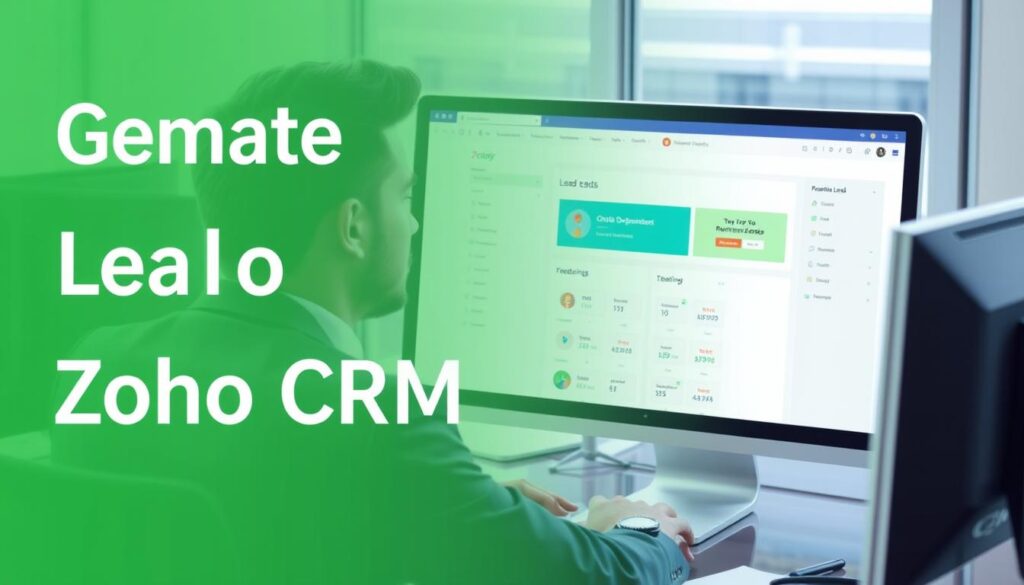
Zoho CRM stands out as a top choice for businesses looking to enhance their lead management capabilities. With its comprehensive set of tools, Zoho CRM helps businesses streamline their sales processes and improve overall performance.
Lead Generation and Nurturing Tools
Zoho CRM offers advanced lead generation and nurturing tools that enable businesses to capture, track, and manage leads effectively. Its sales team automation features allow for personalized engagement, ensuring that leads are nurtured through the sales funnel. This results in higher conversion rates and improved sales performance.
Cost-Effectiveness for Growing Teams
One of the key advantages of Zoho CRM is its cost-effectiveness for growing teams. With a tiered pricing structure that includes a free version, as well as Standard ($14/month), Professional ($23/month), Enterprise ($40/month), and Ultimate ($52/month) plans, businesses can choose the level that best suits their needs. This flexibility, combined with features like platform customization and marketing automation, makes Zoho CRM an attractive option for businesses of all sizes.
Microsoft Dynamics 365: Comprehensive Business Solution

In the realm of CRM solutions, Microsoft Dynamics 365 emerges as a powerful tool, equipped with AI-powered customer insights and personalized marketing capabilities. It excels in marketing, allowing businesses to engage with customers in real-time and offer a holistic, personalized customer journey.
Integration with Microsoft Ecosystem
One of the standout features of Dynamics 365 is its seamless integration with other Microsoft products, creating a unified platform that enhances productivity and efficiency. This integration enables businesses to leverage familiar tools like Office 365 and Outlook, streamlining their operations and improving customer data management.
AI-Powered Customer Insights
Dynamics 365 utilizes artificial intelligence to provide predictive analytics and actionable customer insights. This AI capability helps sales teams identify cross-selling and upselling opportunities, prioritize sales efforts through predictive lead scoring, and automate routine tasks, allowing for more personalized and effective customer interactions.
- Predictive analytics for better customer understanding
- AI-driven recommendations for sales teams
- Sentiment analysis for personalized customer service
- Predictive lead scoring for optimized sales efforts
- AI automation for enhanced productivity
By harnessing the power of AI and integrating it with the Microsoft ecosystem, Dynamics 365 offers a comprehensive business solution that can significantly enhance customer relationships and drive business growth.
Freshworks CRM: AI-Enhanced Customer Engagement
Freshworks CRM is revolutionizing customer engagement with its AI-enhanced capabilities. This powerful tool enables businesses to streamline their customer interactions and improve overall customer satisfaction.
Freddy AI Capabilities
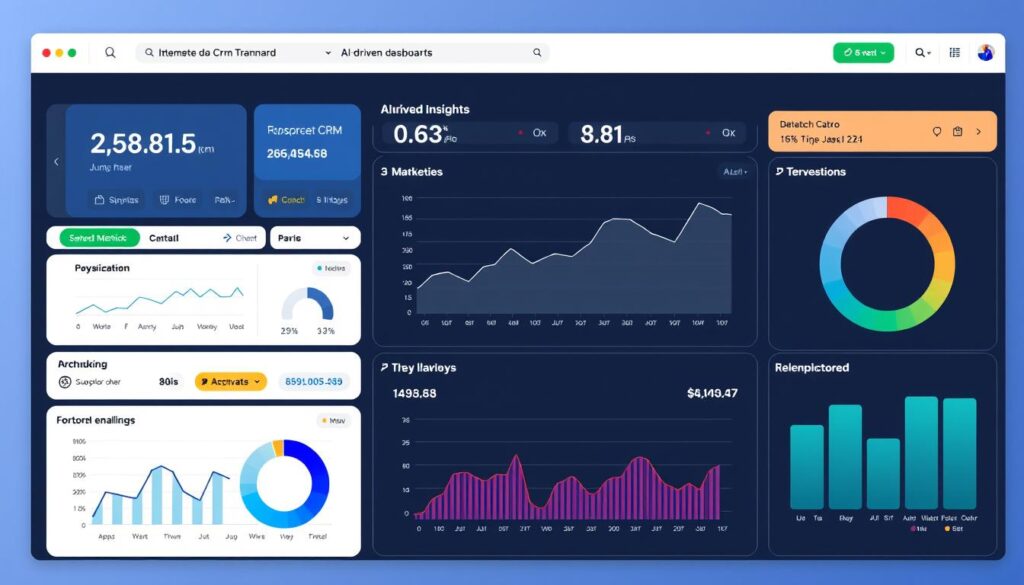
Freshworks CRM incorporates a powerful conversational AI option called Freddy, allowing companies to enhance their revenue predictability with dynamic forecasting. Freddy AI capabilities enable businesses to automate tasks, gain valuable insights, and make data-driven decisions.
User-Friendly Interface and Setup
Freshworks CRM’s intuitive interface reduces the learning curve and accelerates user adoption, saving time and increasing productivity. The platform’s visual pipeline management and drag-and-drop customization features make it easy to set up and use, allowing businesses to get operational in days rather than weeks.
Budget-Friendly CRM Options for Startups
Budget-friendly CRM options are crucial for startups looking to establish strong customer relationships without overspending. Startups need CRM solutions that are not only effective but also affordable.
Free and Low-Cost CRM Programs
Several CRM programs offer free or low-cost plans that are ideal for startups. For instance, OnePageCRM is an ultra-simple and easy-to-use CRM tool designed for small businesses, offering all the core CRM features at an affordable price. With OnePageCRM, you pay for one CRM and get extra tools for free, including a Sales Dialer, Web Forms, Lead Clipper, Business Card Scanner, and AI Sales Route Planner.
Essential Features in Affordable Solutions
When selecting a budget-friendly CRM, it’s essential to prioritize features that align with your business needs. Key features to look for include:
- Contact management capabilities
- Basic pipeline tracking
- Email integration
Affordable CRM solutions focus on essential functionality rather than advanced features, making them perfect for small businesses. By prioritizing features based on your specific business model and customer acquisition strategy, you can maximize the value of your CRM software.
How to Choose the Right CRM Program for Your Business
With numerous CRM options available, choosing the right one for your business requires careful consideration of several key factors. The process involves assessing your business needs, evaluating your team’s technical expertise, and considering integration requirements.
Assessing Your Business Needs and Goals
Understanding your business objectives is crucial in selecting a CRM that aligns with your goals. Consider what features are essential for your operations, such as sales tracking, customer service, or marketing automation.
Evaluating Team Size and Technical Expertise
The size of your team and their technical proficiency play a significant role in CRM adoption. Choose a CRM that is user-friendly and scalable to your team’s needs.
Considering Integration Requirements
While most CRMs offer integration with other applications, some like Nextiva manage all business communication from a single platform, eliminating the need for third-party integrations. When evaluating CRM options, consider the following:
- Identify critical integration requirements based on your existing business software ecosystem.
- Evaluate API capabilities and pre-built connectors for essential tools.
- Consider how data synchronization between systems impacts workflow efficiency and information accuracy.
- Assess whether a comprehensive all-in-one platform or a specialized CRM with integrations better suits your needs.
Proper integration planning is key to preventing data silos and ensuring a unified view of customer information. By carefully evaluating these factors, you can select a CRM program that enhances your business operations, improves data management, and streamlines your workflow using the right software and tools, ultimately driving growth through effective integrations.
Implementation Best Practices for CRM Success
Implementing a CRM system requires careful planning and execution to achieve the desired business outcomes. A successful CRM implementation can lead to significant improvements in sales performance, customer satisfaction, and overall business efficiency.
Training Your Team Effectively
Effective training is crucial for the successful adoption of a CRM system. It’s essential to provide comprehensive training that covers all aspects of the CRM, from basic navigation to advanced features. This ensures that your team can maximize the system’s capabilities and improve their sales performance.
Data Migration Strategies
Data migration is a critical step in CRM implementation. It’s vital to develop a strategy that ensures accurate and efficient data transfer. This includes cleaning and organizing existing data, mapping data fields, and testing the migration process to avoid any disruptions to your business operations.
Measuring ROI from Your CRM Investment
To justify the investment in a CRM system, it’s crucial to measure its return on investment (ROI). This involves tracking key performance indicators (KPIs) such as sales growth, customer satisfaction, and process efficiency. By regularly analyzing these metrics, businesses can optimize their CRM usage and improve their overall performance over time.
Some key considerations for measuring CRM ROI include:
- Establishing baseline measurements before implementation
- Tracking quantitative metrics such as sales growth and conversion rates
- Assessing qualitative outcomes like customer satisfaction
- Calculating the total cost of ownership, including software, implementation, and maintenance
Conclusion: Transforming Customer Relationships with the Right CRM
In the quest for sustainable business growth, companies are increasingly turning to CRM software to nurture customer relationships, enhance team collaboration, and drive sales performance.
A suitable CRM program enables businesses to streamline customer data management, improve sales forecasting, and foster a customer-centric business model.
By choosing the right CRM solution and implementing it effectively, businesses can achieve significant growth and stay competitive in the market.
As CRM technology continues to evolve with advancements in AI, automation, and deeper integrations, businesses must stay informed to make the most of their CRM investment.