In today’s competitive landscape, effective customer relationship management is crucial for small businesses to thrive. Managing customer interactions, sales processes, and data can be overwhelming, but the right tools can make all the difference.
Top-rated CRM solutions offer a centralized hub for sales information and processes, enabling businesses to build authentic relationships with clients. By leveraging these management tools, companies can streamline their operations, improve customer retention, and drive growth.
With numerous options available, selecting the best CRM can be daunting. This guide will explore the top CRM software solutions for small businesses, highlighting key features, pricing, and ideal use cases to help you make an informed decision.
Why Small Businesses Need CRM Software in 2025
With the rise of digital technology, small businesses are turning to CRM software to streamline their operations and improve customer relationships. In 2025, the competitive landscape demands that businesses be more efficient and personalized in their interactions.
The Impact of Effective Customer Relationship Management
Effective customer relationship management is crucial for small businesses, enabling them to organize contact information, track interactions, and identify sales opportunities. By leveraging CRM systems, small businesses can provide personalized service that competes with larger companies, despite limited resources.
Modern CRM solutions offer automation capabilities that save time on manual data entry and follow-up tasks, allowing teams to focus on high-value activities. The right CRM system serves as a central hub for customer data, making information accessible across teams and eliminating silos that can harm the customer experience.
How CRM Solutions Drive Small Business Growth
CRM solutions enable small businesses to scale their operations without proportionally increasing staff, allowing for sustainable growth and improved profitability. By implementing CRM software, small businesses can significantly improve customer retention rates, which is often more cost-effective than acquiring new customers.
In 2025’s competitive landscape, businesses without CRM systems risk falling behind competitors who leverage customer data for more personalized and efficient service. By adopting CRM software, small businesses can drive growth, enhance customer satisfaction, and remain competitive.
Key Features to Look for in Small Business CRM Software
When selecting CRM software for your small business, it’s crucial to identify the key features that will drive growth and efficiency. The right CRM can help you manage customer relationships, streamline sales processes, and improve overall productivity.

Essential CRM Capabilities for Small Teams
For small teams, certain CRM features are essential for daily operations. Contact management is a fundamental capability, allowing you to store comprehensive customer information and interaction history in one accessible location. Look for CRM software that offers customizable sales pipeline features to match your specific business processes, enabling your team to visualize deals at various stages and forecast revenue more accurately.
Other essential features include task management tools that offer automated reminders, task assignments, and calendar integration to ensure nothing falls through the cracks. Mobile accessibility is also crucial, as it allows team members to update information and access customer data while in the field.
Advanced Features Worth the Investment
While essential features provide a solid foundation, advanced CRM features can offer significant advantages. Automation capabilities can dramatically improve efficiency by automating repetitive tasks like data entry, follow-up emails, and lead assignment. Additionally, reporting and analytics tools provide valuable insights into sales performance, customer behavior, and business growth opportunities that can inform strategic decisions.
For growing businesses, scalability is crucial. Choose a CRM that can accommodate your expanding needs without requiring a complete system change down the road. Advanced AI-powered tools are also becoming increasingly affordable and can provide significant advantages through predictive analytics, lead scoring, and automated data enrichment.
Understanding CRM Pricing Models for Small Businesses
The cost of CRM software can vary significantly, making it vital for small businesses to comprehend the different pricing models available. As businesses grow, their CRM needs evolve, and understanding the pricing structures can help them make informed decisions.

Free vs. Paid CRM Options
CRM pricing models range from completely free options with limited features to enterprise-level solutions costing hundreds of dollars per user monthly. Free CRM plans typically offer basic contact management and simple pipeline features but often limit the number of users, contacts, or records you can store. For instance, HubSpot CRM offers a free plan with basic features, ideal for solopreneurs or very small teams.
Most paid CRM plans operate on a per-user, per-month subscription model, with pricing tiers that unlock additional features, storage, and capabilities as you move up the scale. For example, you can expect to pay anywhere from $10 to $25 per month for entry-level plans with minimal features, $30 to $50 per month for mid-tier plans, and $50 to over $100 per month for top-tier plans.
How to Evaluate CRM Pricing for ROI
When evaluating CRM pricing, consider the total cost of ownership, including implementation time, training requirements, and potential integration expenses. Some CRM providers offer significant discounts for annual billing versus monthly payments, which can result in substantial savings for businesses confident in their long-term CRM choice.
To calculate the potential return on investment, estimate how the CRM will impact key metrics like lead conversion rates, customer retention, sales cycle length, and team productivity. Consider whether a CRM offers modular pricing that allows you to pay only for the specific features or modules your business needs.
As stated by
“The key to successful CRM implementation is not just about the cost, but about the value it brings to your business.”
This emphasizes the importance of evaluating CRM pricing in the context of the overall business value.
Top Free CRM Software for Small Businesses
Small businesses can now leverage powerful CRM tools without breaking the bank, thanks to the evolution of free CRM software options. These solutions offer a range of features that can help manage customer relationships, track sales, and streamline business processes.
When evaluating free CRM options, it’s essential to consider your business needs and future growth plans. The best free CRM plans offer a clear upgrade path, allowing you to scale your CRM as your business expands.
HubSpot CRM: Comprehensive Free Tools
HubSpot CRM stands out with its comprehensive free plan, which includes contact management for up to 1,000 contacts, deal tracking, and basic email marketing tools. The free version also provides valuable sales tools like email templates, meeting scheduling, and basic reporting capabilities that help small teams work more efficiently.
Zoho CRM Free Edition: Feature-Rich Option
Zoho CRM’s free edition supports up to three users and 5,000 records, offering more storage capacity than many competitors. It includes essential features like lead and contact management, tasks, and a customizable sales pipeline. Small businesses appreciate Zoho’s free plan for its workflow rules that allow basic automation.
Freshsales Free Plan: Support-Focused Solution
Freshsales distinguishes its free plan with exceptional customer support (24/5 phone, chat, and email)—a rare offering in free CRM tiers. The Freshsales free plan includes AI-powered contact scoring to help prioritize leads, built-in phone, email, and basic workflow automation features that deliver significant value without cost.
While free CRM software options have their limitations, such as restricted numbers of custom fields or limited integration capabilities, they can be an excellent starting point for small businesses. By understanding the features and limitations of each CRM, businesses can make informed decisions about their customer relationship management needs.
Monday CRM: Best for Visual Pipeline Management

Monday CRM stands out as a top choice for small businesses seeking a visually intuitive platform for managing their sales pipelines. With its user-friendly CRM interface and customizable templates, Monday CRM makes it easy for teams to track deals and manage their sales process efficiently.
Key Features and Pricing
Monday CRM offers a range of features that make it an attractive option for small businesses. Its visual interface allows users to easily track deals and manage their sales pipeline. The platform also includes tools for workflow automation, allowing teams to focus on building customer relationships rather than manual management tasks.
Monday CRM’s pricing model requires a minimum of three users, starting at around $12 per user per month (billed annually). This positions it as a mid-range option that becomes more cost-effective as team size increases. With over 100 integrations available, Monday CRM connects seamlessly with popular business tools like Gmail, Outlook, and Slack.
Ideal Use Cases for Monday CRM
Monday CRM is particularly well-suited for businesses with visual thinkers or teams that benefit from seeing their entire sales process laid out in a highly visual format. Creative agencies, real estate firms, and project-based businesses can especially benefit from Monday CRM’s visual approach and project management capabilities.
The platform’s robust customization options allow businesses to adapt the CRM to their specific processes, making it a versatile tool for a wide range of industries. With its mobile apps for iOS and Android, Monday CRM is also suitable for field sales teams or businesses with remote workers who need full CRM access on the go.
Zoho CRM: Best for Task Management and Affordability

Zoho CRM offers a compelling blend of task management capabilities and affordability, making it ideal for small businesses. With plans starting at just $14 per user per month for the Standard edition, it’s an affordable solution that doesn’t compromise on features.
Zoho CRM vs. Bigin by Zoho
Zoho offers two distinct CRM products tailored to different business needs: the full-featured Zoho CRM for growing businesses and Bigin by Zoho, a simplified version designed specifically for very small businesses and solopreneurs. While Bigin provides a streamlined experience with essential contact and pipeline management at a lower price point ($7/user/month), Zoho CRM includes advanced features like lead scoring, sales forecasting, and quote generation.
Standout Features for Small Business Users
The platform offers one of the most comprehensive task management systems among small business CRMs, with capabilities for task creation, assignment, prioritization, and automated follow-ups. Additionally, Zoho CRM’s automation capabilities allow users to automate routine tasks and complex multi-step processes without requiring technical expertise. The platform also integrates seamlessly with Zoho’s extensive suite of business applications, creating a unified ecosystem that can replace multiple standalone tools.
Overall, Zoho CRM’s balance of powerful features, management capabilities, and affordable pricing makes it an attractive choice for small businesses.
HubSpot: Best All-in-One Marketing and Sales Platform
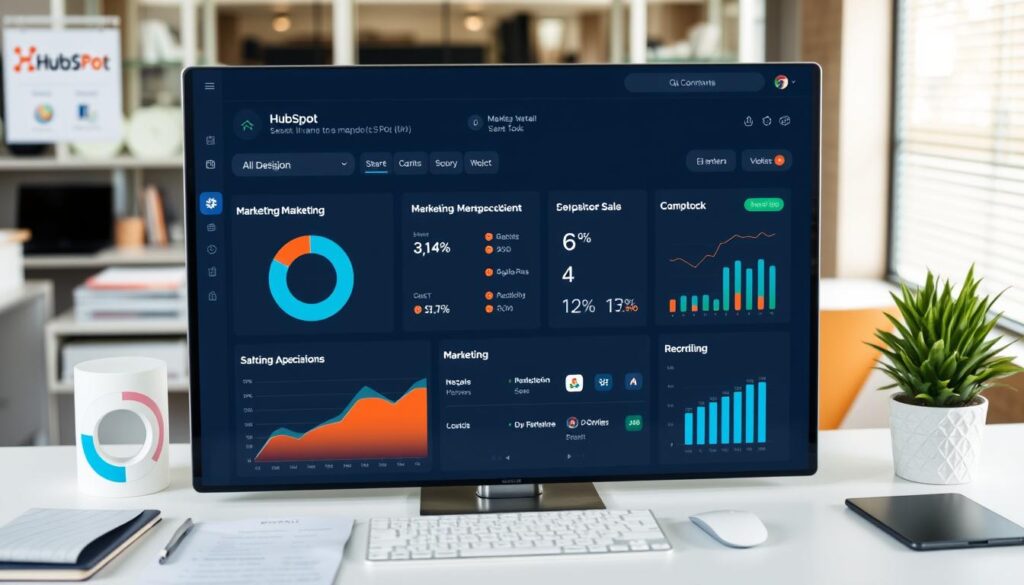
HubSpot’s comprehensive platform integrates CRM, marketing, and sales tools seamlessly, making it an ideal choice for small businesses looking to streamline their operations. With its robust features, HubSpot supports business growth by providing a unified ecosystem for managing customer relationships and sales processes.
HubSpot’s Small Business Toolset
HubSpot’s free CRM is packed with features that support contact management, deal tracking, and basic email marketing. The platform’s intuitive interface ensures that small teams can become productive quickly without extensive training. Key tools include email templates, scheduling tools, and an AI writer that streamline outreach efforts.
The sales hub complements the CRM with features like meeting scheduling, live chat, and deal tracking, improving conversion rates. HubSpot’s marketing tools stand out with intuitive landing page builders, email marketing capabilities, and SEO tools that help generate and nurture leads effectively.
Scaling with HubSpot as Your Business Grows
As businesses grow, HubSpot’s tiered pricing model allows them to start with free tools and gradually add paid features. The Starter plans unlock additional features like more sophisticated automation and increased contact limits. For more complex operations, HubSpot’s Professional and Enterprise tiers provide advanced capabilities like marketing automation and custom reporting.
HubSpot’s extensive marketplace of integrations connects with hundreds of other business tools, ensuring it can fit into existing technology stacks. This scalability and flexibility make HubSpot an excellent choice for small businesses aiming for growth.
Less Annoying CRM: Best Simple Solution for Beginners
For small businesses new to CRM systems, Less Annoying CRM offers a straightforward solution. It’s designed to be easy to use, with a minimal learning curve, making it perfect for businesses that are just starting out with CRM software.
User-Friendly Interface and Learning Curve
Less Annoying CRM lives up to its name by providing an exceptionally clean and intuitive interface that requires minimal training. This allows even technology-averse team members to become productive within hours. The platform focuses on core CRM functionality, including contact management and task tracking, without overwhelming users with unnecessary features.
The system’s user-friendly design makes it particularly well-suited for service businesses, consultants, and small sales teams that need to track client relationships and sales opportunities without complex workflows.
Pricing and Value Proposition
Less Annoying CRM offers a refreshingly simple pricing model: $15 per user per month with no long-term contracts, hidden fees, or feature limitations. This transparency, combined with the platform’s core features, provides excellent value for small businesses prioritizing ease of use and core CRM functionality.
The platform’s single pricing tier includes unlimited contacts, customizable fields, and file storage, eliminating concerns about outgrowing the system or facing unexpected charges as your database expands.
Freshsales: Best for AI-Powered Sales Insights

Leveraging the power of AI, Freshsales provides small businesses with a cutting-edge CRM solution that streamlines their sales process. By analyzing data such as website visits, email engagement, and past sales, Freshsales identifies promising leads and predicts deal success.
Freddy AI Assistant Capabilities
Freshsales distinguishes itself with its AI assistant, Freddy AI, which offers intelligent insights and automation capabilities. Freddy AI analyzes conversation patterns and customer interactions to suggest responses and next best actions for sales representatives, improving engagement rates. The AI-powered lead scoring feature automatically identifies the most promising prospects, allowing sales teams to prioritize their efforts effectively.
Support and Implementation Features
Freshsales not only excels in AI-powered sales insights but also in its support and implementation features. The platform offers 24/5 phone, chat, and email support even on its free plan, a significant advantage over competitors. The implementation process is streamlined with intuitive setup wizards and guided onboarding, helping small businesses get up and running quickly. Freshsales also integrates seamlessly with other Freshworks products, creating a unified platform for customer engagement across departments.
With its comprehensive free plan supporting up to three users and core CRM functionality, Freshsales is an excellent starting point for small teams. The Growth plan unlocks additional AI capabilities, workflow automation, and advanced customization options, delivering significant value for growing sales teams.
Pipedrive: Best for Sales-Focused Small Businesses
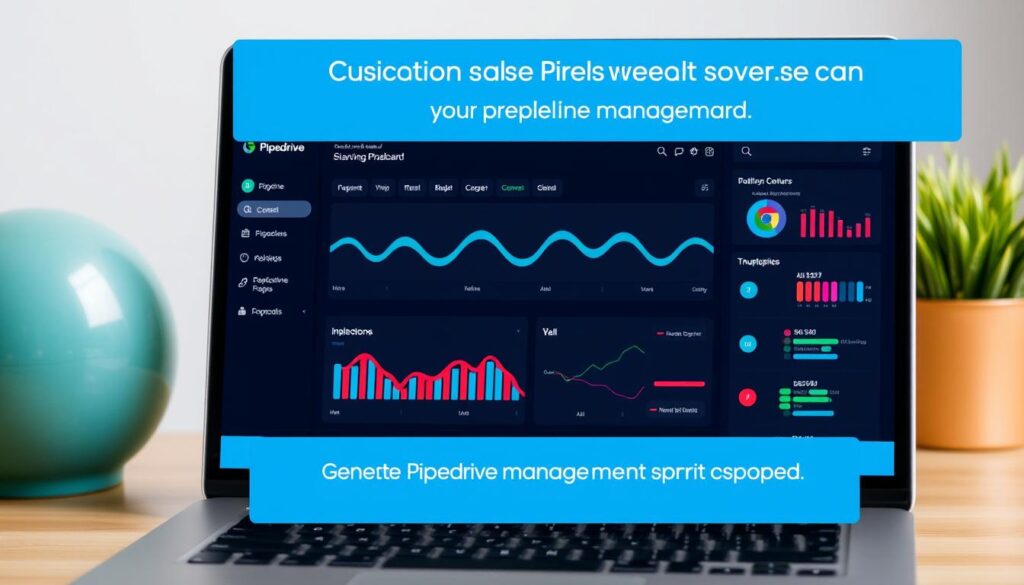
With its sales-centric approach, Pipedrive provides an ideal CRM solution for small businesses looking to boost their sales. Pipedrive helps small to mid-sized businesses (SMBs) close deals faster with its array of visual tools, custom reports, and AI assistance.
Visual Sales Pipeline Management
Pipedrive was built specifically for sales teams, putting the sales pipeline at the center of the user experience. The platform’s highly visual pipeline view offers an intuitive drag-and-drop interface, giving sales representatives and managers immediate visibility into deal status, potential bottlenecks, and sales forecasts. This visual management capability is crucial for sales-focused small businesses, enabling them to manage their sales pipeline effectively and make informed decisions.
AI-Powered Sales Tools and Insights
Pipedrive has incorporated AI capabilities across all pricing tiers, including sales assistant features that provide AI-powered insights and personalized tips. The platform’s AI-powered sales forecasting analyzes historical performance and current pipeline data to provide more accurate revenue predictions, helping small businesses with cash flow planning and resource allocation. These tools enable businesses to stay ahead in the competitive sales landscape.
Pipedrive’s comprehensive suite of sales tools and features, including email integration, mobile apps, and customization capabilities, makes it a robust CRM solution. With plans starting around $15 per user per month, Pipedrive offers a competitive entry point for small businesses seeking a dedicated sales CRM with visual pipeline management and AI-enhanced insights.
Nimble: Best for Social Media Integration

Nimble CRM is designed to simplify customer relationships, with a particular emphasis on social media integration. This user-friendly CRM leverages AI to analyze interactions, helping businesses understand customers better and prioritize leads.
Contact Enrichment and Social Insights
Nimble’s contact enrichment feature automatically fills in missing information from social networks and the web, saving hours of manual data entry. This provides deeper insights into prospects and customers, enabling businesses to make informed decisions.
The platform’s social listening capabilities alert users when contacts mention specific keywords or topics on social media, creating timely opportunities for meaningful engagement.
Email Integration and Follow-Up Features
Nimble’s email integration is particularly strong, working directly within Gmail or Outlook to provide contact insights and interaction history without switching between applications.
The “Stay in Touch” reminders help maintain customer relationships by automatically suggesting follow-ups based on the importance of contacts and time since last interaction.
Nimble positions itself as a mid-range option that delivers exceptional value for businesses leveraging social media for prospecting and relationship building, priced around $25 per user per month.
Salesforce: Best for Scalability and Integrations

As the CRM market leader, Salesforce provides small businesses with a powerful tool that can grow with their needs. Salesforce remains the market leader in CRM solutions, offering small businesses access to the same powerful platform used by Fortune 500 companies but with editions specifically tailored to smaller organizations.
Small Business Editions and Pricing
Salesforce offers various editions to suit different business needs, with the Salesforce Essentials plan priced at $25 per user per month. This plan provides core sales and service functionality, including contact and opportunity management, email integration, and basic reporting. The Starter Suite is another competitively priced CRM solution that gives you one unified view of your customers across sales, service, and marketing with built-in AI for lead prioritization and data insights.
Ecosystem and Integration Capabilities
The Salesforce AppExchange marketplace offers over 3,000 pre-built applications and integrations, allowing small businesses to extend their CRM with industry-specific solutions or connections to other business tools. The platform’s customization capabilities are extensive, enabling businesses to adapt fields, processes, and workflows to match their specific needs as they evolve over time. This scalability and flexibility make Salesforce an ideal choice for small businesses anticipating growth.
With its robust API and development tools, Salesforce provides unlimited potential for custom integrations and functionality, ensuring the platform can grow with even the most complex business requirements. The ecosystem includes complementary products like Pardot (marketing automation), Service Cloud (customer support), and Commerce Cloud (e-commerce) that integrate seamlessly as businesses expand their customer engagement strategies.
How to Successfully Implement CRM Software in Your Small Business
Implementing CRM software can be a game-changer for small businesses, but it requires careful planning and execution. To ensure success, businesses must align their CRM implementation with their specific sales processes and team needs.
Setting Up Your CRM to Match Your Sales Process
To maximize the effectiveness of CRM software, it’s essential to set it up to match your current sales process. This involves mapping out your existing sales stages, identifying required information at each step, and determining handoff points between team members. By customizing CRM fields, pipelines, and automation rules to fit your business processes, you can ensure a seamless integration that supports rather than disrupts your workflow.
- Define your CRM objectives to guide configuration decisions and measure success.
- Clean and deduplicate your existing customer data before importing it into the new system.
- Prioritize integration with essential tools like email, calendars, and communication platforms.

Training Your Team for Maximum Adoption
A successful CRM implementation also depends on effective team training. Developing a comprehensive training program that goes beyond basic functionality is crucial. This involves showing team members how the CRM will make their specific jobs easier and help them achieve their individual goals.
- Appoint CRM champions within each department to provide peer support and encourage adoption.
- Create clear expectations and accountability for CRM usage, potentially tying it to performance reviews.
- Start with essential features and gradually introduce more advanced capabilities as your team becomes comfortable with the system.
By following these best practices, small businesses can ensure a successful CRM implementation that drives business success and enhances customer relationships.
Conclusion: Choosing the Right CRM Software for Your Small Business
The journey to finding the perfect CRM software for your small business involves considering multiple factors, from ease of use to scalability. As you’ve seen, there’s no one-size-fits-all solution; the ideal CRM balances functionality, usability, and affordability while aligning with your specific sales processes and customer engagement strategy.
When evaluating CRM options, it’s crucial to balance your immediate needs with long-term growth plans. Consider your team’s technical proficiency and appetite for learning new systems. Even the most feature-rich CRM will fail if your staff finds it too complicated or time-consuming to use consistently.
Industry-specific requirements also play a significant role in choosing the right CRM. Certain platforms offer specialized features for sectors like real estate, professional services, manufacturing, or retail. Evaluating potential CRM solutions based on your specific industry needs can significantly impact their effectiveness.
Budgeting realistically for both direct costs (subscription fees) and indirect expenses like implementation time, training, potential customization, and ongoing administration is vital. Prioritize CRM providers that offer strong customer support, comprehensive documentation, and active user communities to help you overcome challenges and maximize your system’s value.
To make an informed decision, take advantage of free trials and demos, involving key team members in the evaluation process. Consider how each CRM option integrates with your existing technology stack, prioritizing platforms that connect seamlessly with your essential business tools.
Look beyond flashy features to assess the quality and accessibility of each CRM’s reporting and analytics capabilities. These insights will drive strategic decisions and demonstrate ROI. Remember, successful CRM implementation is an ongoing process rather than a one-time event. Choose a provider that continues to innovate and improve their platform to support your evolving business needs.
By carefully considering these factors and taking a thoughtful approach to CRM selection, you can find the perfect CRM software for your small business, driving growth, enhancing customer relationships, and ultimately leading to success.