In today’s competitive market, having the right customer relationship management software is crucial for driving sales growth and improving customer interactions.
A robust CRM platform tailored to your business processes and clients can significantly enhance your results in the long run. With numerous options available, selecting the most suitable CRM software can be challenging.
This comprehensive guide compares top CRM programs in 2025, examining their essential features, pricing structures, and real-world performance to help you make an informed decision that supports your sales objectives.
What CRM Software Is and Why It Matters
In today’s business landscape, CRM software plays a vital role in managing customer relationships effectively. Customer relationship management software, or CRM for short, is a platform designed to help organizations manage interactions with customers and prospects efficiently.
Evolution of Customer Relationship Management
The concept of CRM dates back to the 1950s when sales representatives used a Rolodex to store customer contact information. Over time, CRM software has evolved significantly, transforming from simple contact management systems to sophisticated platforms that track every aspect of customer interactions across multiple channels. Modern CRM software serves as a central hub where businesses can store customer data, track sales activities, and analyze relationship patterns to improve service delivery.
The evolution of customer relationship management has transformed how companies approach sales, moving from transactional relationships to long-term partnerships built on data-driven insights.
Core Benefits for Businesses of All Sizes
For businesses of all sizes, CRM software provides measurable benefits, including improved lead conversion rates, enhanced customer retention, and more efficient sales processes. Today’s CRM solutions offer scalability, allowing small businesses to access powerful relationship management tools previously available only to large enterprises.
- Centralizing customer information to eliminate data silos between departments
- Creating a unified view of each customer’s journey
- Enabling more personalized customer experiences
By leveraging these benefits, businesses can strengthen their customer relationships and drive sales growth.
Essential Features of Top CRM Solutions
When evaluating the best CRM programs, it’s crucial to understand the essential features that top solutions offer. These features are designed to enhance customer relationship management, streamline sales processes, and improve overall business efficiency.
Contact and Pipeline Management Capabilities
Effective contact management forms the foundation of any quality CRM, allowing teams to store comprehensive customer data and track all interactions in one centralized location. This capability ensures that businesses can maintain a clear overview of their customer relationships.
Pipeline management tools provide visual representations of your sales process, enabling teams to track deals through each stage and identify bottlenecks that might be slowing down conversions. By leveraging these tools, businesses can optimize their sales strategies and improve forecasting accuracy.

Automation, Reporting, and Integration Options
Automation features in top CRM solutions can dramatically increase productivity by handling routine tasks like data entry, follow-up email scheduling, and lead assignment without manual intervention. This automation enables sales teams to focus on high-value activities.
Reporting and analytics tools transform raw customer data into actionable insights, with customizable dashboards that highlight key performance indicators relevant to your specific business goals. These tools help businesses make informed decisions and adjust their strategies accordingly.
Integration capabilities are crucial for connecting your CRM with other business tools like email platforms, marketing automation software, and accounting systems to create a seamless workflow. This integration ensures that businesses can leverage their CRM as a central hub for customer relationship management.
Mobile Accessibility and User Experience
Mobile accessibility has become non-negotiable in modern CRM solutions, allowing sales teams to update records, access customer information, and manage tasks while working remotely or in the field. This flexibility is essential for businesses with mobile workforces.
User experience considerations like intuitive interfaces and customizable views significantly impact adoption rates and the overall effectiveness of your CRM implementation. A well-designed CRM system ensures that users can easily navigate and utilize its features.
Types of CRM Platforms for Different Business Needs
The world of CRM software is not one-size-fits-all; it encompasses multiple types designed for specific business needs. In practice, many organizations use CRM systems that combine elements of various types to provide a comprehensive customer relationship management solution across the entire business.
Operational CRM Systems
Operational CRM systems focus on streamlining and automating customer-facing business processes. These systems are ideal for businesses prioritizing sales automation, marketing campaigns, and service ticket management. By managing day-to-day customer interactions and tracking the customer journey, operational CRMs help turn prospects into loyal clients.
Analytical CRM Solutions
Analytical CRM solutions leverage data mining and business intelligence tools to transform customer data into actionable insights. These platforms enable businesses to make data-driven decisions by analyzing historical performance, identifying profitable customer segments, and predicting future purchasing behaviors, thereby enhancing strategic planning and targeted marketing efforts.
Collaborative CRM Platforms
Collaborative CRM platforms facilitate information sharing across departments, breaking down silos between sales, marketing, and customer service teams. By providing a unified view of customer interactions, collaborative CRMs ensure consistent messaging and service delivery, regardless of which department handles the customer relationship, ultimately improving customer satisfaction.
Most modern CRM software incorporates elements of all three types, allowing businesses to customize their approach based on specific needs and growth objectives. This flexibility makes CRM platforms invaluable tools for businesses of all sizes.
How AI is Revolutionizing Modern CRM Software
AI-powered CRM solutions are setting a new standard in customer relationship management by offering predictive analytics and automation. According to The state of sales technology 2025 report from monday.com, 82% of respondents are using AI to boost productivity and work more efficiently. This significant adoption underscores the transformative impact of AI on CRM platforms.

AI-Powered Analytics and Predictions
AI integration is transforming CRM software from passive data repositories into proactive business intelligence tools that can predict customer needs and behaviors with remarkable accuracy. Modern AI-powered analytics can process vast amounts of customer data to identify patterns and trends that would be impossible for human analysts to detect. This capability provides sales teams with unprecedented insights into buying signals, enabling them to make informed decisions.
Predictive lead scoring is another significant advantage, using AI algorithms to evaluate prospects based on their likelihood to convert. This allows sales representatives to prioritize their efforts on the most promising opportunities, thereby enhancing sales efficiency.
Automation and Workflow Enhancement
Workflow automation powered by AI can handle routine tasks like data entry, meeting scheduling, and follow-up reminders, freeing sales professionals to focus on relationship-building activities that require human touch. As noted by industry experts, “AI-driven automation is not just about efficiency; it’s about creating a more personalized customer experience.”
“AI is revolutionizing the way businesses interact with customers, making CRM systems more intuitive and responsive.”
Natural language processing capabilities enable CRM systems to analyze customer communications across channels, extracting sentiment and intent data that helps teams respond more appropriately to customer needs. Voice recognition and conversational AI are also making CRM tools more accessible to users in the field, allowing for hands-free data entry and retrieval that improves adoption rates and data accuracy.
By leveraging these AI-powered features, businesses can significantly enhance their sales strategies and customer relationship management, driving growth and improving overall efficiency.
The Best CRM Programs for 2025 Compared
In the ever-evolving landscape of customer relationship management, identifying the best CRM software for 2025 is crucial for businesses aiming to stay ahead. Our comprehensive comparison evaluates the top CRM platforms, focusing on their features, pricing, and overall value to businesses of various sizes.
Evaluation Methodology
Our evaluation involved testing over 140 CRM platforms across multiple business scenarios to identify the most exceptional solutions. We created test environments that simulated real-world usage patterns for businesses of different sizes and industries, from startups to enterprise organizations. This approach allowed us to assess each platform based on core functionality, ease of use, customization options, integration capabilities, mobile access, reporting tools, and value for money.
Key aspects of our evaluation methodology included:
- Assessing core functionality and ease of use
- Evaluating customization options and integration capabilities
- Examining mobile access and reporting tools
- Analyzing value for money and pricing structures
Key Comparison Criteria
When comparing the best CRM software, we prioritized key features that drive productivity and enhance customer relationships. These included contact and pipeline management, automation capabilities, reporting depth, user interface design, and the availability of AI-enhanced tools.
The most critical comparison criteria were:
- Contact and pipeline management capabilities
- Automation and workflow enhancement features
- Reporting and analytics tools
- User interface and experience
- AI-powered features and predictions
Quick Comparison Table
Our comparison table provides a quick reference for decision-makers, highlighting pricing structures, standout features, and ideal use cases for each of the top CRM programs. This table helps businesses quickly identify the most suitable CRM solution based on their specific needs.
The table below summarizes the key features and pricing of the top CRM solutions:
| CRM Platform | Pricing | Standout Features |
|---|---|---|
| Salesforce Sales Cloud | $25/user/month | Enterprise-grade extensibility, AI-powered analytics |
| HubSpot CRM | Free – $50/user/month | Marketing integration, versatile solution for growing teams |
| Zoho CRM | $12/user/month | AI-powered features, best value for businesses |
Salesforce Sales Cloud: Enterprise-Grade Extensibility

As the CRM market continues to evolve, Salesforce Sales Cloud remains at the forefront, providing enterprise-grade solutions for complex sales environments. This platform is particularly beneficial for mid-size to large enterprises with sophisticated sales processes, offering unmatched extensibility through its AppExchange marketplace.
Overview and Best Use Cases
Salesforce Sales Cloud excels in environments where multiple teams require coordinated access to customer data. Its robust features make it ideal for businesses with complex sales operations, providing a centralized platform for managing sales activities. The platform’s scalability is a significant advantage, allowing businesses to grow without needing to migrate to new systems.
Standout Features and AI Capabilities
The Einstein AI capabilities within Salesforce Sales Cloud set it apart from other CRM solutions. Features such as intelligent lead scoring, opportunity insights, and automated activity capture enable sales teams to focus on high-value tasks rather than administrative duties. Additionally, the platform’s robust customization options allow businesses to tailor workflows and processes to their specific needs.
Pros and Cons
One of the primary advantages of Salesforce Sales Cloud is its wide range of AI features and extensive customization capabilities. However, this flexibility can come with a steeper learning curve. Moreover, while the platform is highly scalable, migrating out of Salesforce can be challenging if needed in the future.
Pricing Structure
The pricing for Salesforce Sales Cloud starts at $25 per user monthly for the Essentials plan. More advanced features are available in the Professional ($75), Enterprise ($150), and Unlimited ($300) tiers. Organizations should consider not only the monthly cost per user but also potential implementation costs and the need for dedicated administrators to maximize the platform’s capabilities.
HubSpot CRM: Versatile Solution for Growing Teams

HubSpot CRM offers a unique blend of powerful tools and ease of use, making it ideal for growing teams. This versatility is evident in two key areas: its comprehensive suite of Hubs and its flexible pricing plans.
Overview and Best Use Cases
HubSpot CRM is designed to support businesses at various stages of growth. Its free plan is particularly attractive, offering unlimited CRM contacts and basic features across its sales, marketing, and service tools. This makes it an excellent choice for small businesses or startups looking to establish a solid foundation for customer relationship management.
The platform’s greatest strength lies in its seamless integration between sales and marketing functions, creating a unified approach to customer acquisition and relationship management.
Standout Features and Marketing Integration
One of the standout features of HubSpot CRM is its ability to integrate sales and marketing functions seamlessly. This integration eliminates common departmental silos, allowing for a more cohesive approach to customer engagement.
Key Features:
- 2-way data sync with other apps
- Intuitive user experience
- Comprehensive Hubs for sales, marketing, customer support, content management, operations, and commerce
Pros and Cons
HubSpot CRM’s pros include its intuitive user experience and robust feature set. However, one of its cons is the steep pricing associated with enterprise-level plans.
Despite this, the platform’s value proposition remains strong for businesses that leverage its full suite of tools.
Pricing Structure
HubSpot CRM offers a flexible pricing structure, with a free plan available and paid plans starting at $20/user/month. The tiered “Hubs” allow businesses to upgrade specific functional areas as needed, without requiring investment in unused features.
This scalability makes HubSpot CRM an attractive option for growing teams.
Zoho CRM: Best Value with AI-Powered Features

Zoho CRM’s blend of advanced AI features and affordable pricing makes it a compelling choice for companies of all sizes. As businesses look for CRM solutions that offer both functionality and value, Zoho CRM stands out as a top contender.
Overview and Best Use Cases
Zoho CRM is designed to cater to the diverse needs of businesses, from small startups to large enterprises. Its all-in-one CRM solution integrates various tools and features that streamline sales, marketing, and customer service processes. The software is particularly beneficial for businesses looking for an enterprise-ready CRM without the hefty price tag.
The best use cases for Zoho CRM include businesses that require robust CRM functionality, customization options, and seamless integration with other business applications. It’s also an excellent choice for companies already using other Zoho products, as it integrates well within the Zoho ecosystem.
Standout Features and Zia AI Assistant
One of the standout features of Zoho CRM is its Zia AI assistant, which brings a new level of intelligence to CRM operations. Zia works both in the background and through a dedicated chat window, allowing users to ask questions about their data and receive insightful responses. This AI capability helps in cleaning contact data, identifying promising leads, and detecting anomalies in the sales process.
Other notable features include advanced automation capabilities, customizable workflows, and a user-friendly interface that simplifies complex CRM tasks. The software also offers mobile accessibility, ensuring that users can manage their CRM activities on the go.
Pros and Cons
Zoho CRM has several advantages, including its all-in-one CRM solution and enterprise-ready features. The pricing is also competitive, making it accessible to businesses with varying budgets. However, one of the drawbacks is that the user interface could be more intuitive, requiring some time to get accustomed to.
Pricing Structure
Zoho CRM offers a free plan that supports up to three users with basic functionality. The paid plans start at $14 per user monthly (billed annually) for the Standard plan and go up to $52 per user monthly for the Ultimate plan, which includes advanced features. Additionally, Zoho CRM Plus is available at $57 per user monthly, bundling multiple Zoho applications for a comprehensive business solution.
Pipedrive: Intuitive Sales Pipeline Management

Pipedrive’s intuitive design makes it a top choice for sales teams looking to optimize their pipeline management. Designed by sales professionals, Pipedrive mirrors how successful sales teams work, providing a visual pipeline view that gives immediate clarity on deal status.
Overview and Best Use Cases
Pipedrive excels in organizations with defined sales methodologies, as its customizable pipeline stages can be configured to match specific sales processes. This makes it particularly useful for businesses with complex sales cycles.
The platform is ideal for sales teams looking for a user-friendly CRM that simplifies their workflow and enhances productivity.
Standout Features and Ease of Use
The user interface is among the most approachable in the CRM market, with contextual menus and clear navigation that reduce the cognitive load on busy sales professionals. Pipedrive’s activity-based selling philosophy prompts users to schedule specific next steps for each deal, providing clear visibility into upcoming tasks.
Key features include easy workflow automation and a marketplace of add-ons for expanding into marketing automation, lead generation, and customer service.
Pros and Cons
Pipedrive’s pros include its easy workflow automation and plenty of educational content, making it a valuable tool for sales teams. However, it can become expensive quickly, especially with additional add-ons.
Pricing Structure
Pipedrive’s pricing starts at $14 per user monthly (billed annually) for the Essential plan, with more advanced features available in Advanced ($27), Professional ($49), and Enterprise ($99) tiers. While costs can increase with add-ons, the platform offers a robust free trial to test its features.
monday CRM: Customizable AI-Powered Workflows

The monday CRM platform stands out for its ability to centralize sales cycles, automate tasks, and provide valuable insights. Powered by AI, it’s a fully customizable, no-code sales platform that lets businesses organize and manage their pipeline effectively.
Overview and Best Use Cases
monday CRM has rapidly gained popularity for its highly visual, customizable approach to workflow management. It’s particularly beneficial for teams that require flexibility in their sales processes and need to adapt quickly to changing demands. The platform excels in cross-functional environments where sales teams collaborate closely with marketing, operations, and customer success.
Standout Features and Automation Capabilities
The platform’s standout features include its contact management capabilities, where AI is used to auto-log emails and suggest next steps, and its pipeline visibility, offering a 360° view of every deal and lead. Additionally, monday CRM’s AI automation allows users to create sophisticated workflows using a visual recipe builder and AI-powered suggestions, significantly reducing manual data entry.
Pros and Cons
Among the pros are monday CRM’s highly customizable interface, no-code automation capabilities, and exceptional clarity in deal status and task ownership. However, being newer to the CRM space, some users might find it lacks the maturity of more established competitors. Nonetheless, monday’s rapid development cycle and responsive approach to user feedback have quickly established it as a serious contender.
Pricing Structure
monday CRM offers a free 14-day trial, with plans starting from $12/seat/month (billed annually) for the Basic plan. More advanced features are available in the Standard ($14), Pro ($24), and Enterprise (custom pricing) tiers, offering good value for teams seeking workflow automation capabilities.
Freshsales: Simple Lead Management with AI

By combining AI-driven insights with automation, Freshsales CRM helps businesses optimize their sales pipelines. Freshsales has established itself as a streamlined CRM solution that excels in lead management simplicity while incorporating powerful AI capabilities through its Freddy AI assistant.
Overview and Best Use Cases
Freshsales CRM is designed for businesses looking to manage leads, customer engagement, and sales automation efficiently. It is particularly well-suited for companies transitioning from spreadsheets or basic contact management systems to their first formal CRM. The platform offers an approachable interface with progressive complexity, making it ideal for growing businesses.
Standout Features and Freddy AI
Freshsales CRM offers several standout features, including sales pipeline management, AI-powered insights via Freddy AI, and automation capabilities. Freddy AI differentiates Freshsales by providing intelligent lead scoring, contact enrichment, and predictive deal insights. These features help sales teams prioritize their efforts on the most promising opportunities, ensuring efficient lead qualification and conversion.
The built-in phone, email, and chat capabilities create a unified communication hub, eliminating the need to switch between applications when engaging with prospects and customers.
Pros and Cons
One of the significant advantages of Freshsales CRM is its ability to provide a unified CRM for sales, marketing, and support teams. The platform excels in environments where lead qualification efficiency is critical, with automated lead scoring and routing. However, while not as customizable as some enterprise solutions, Freshsales offers excellent value through its Forever Free plan for up to three users and affordable paid tiers starting at just $9 per user monthly (billed annually).
Pricing Structure
Freshsales CRM offers a Free 21-day trial, allowing businesses to test its features before committing. The Free Forever plan is available for up to 3 users, making it an attractive option for small businesses or startups. Paid plans start from $9/user/month (billed annually), providing a scalable pricing structure that grows with the business.
Nimble: Prospecting Solution for Small Teams

Nimble has established itself as a go-to CRM for small teams that prioritize building strong relationships. With its gorgeous user interface and simple pricing structure, Nimble is particularly appealing to single users and small teams looking for a powerful yet easy-to-use CRM solution.
Overview and Best Use Cases
Nimble CRM is designed specifically for small teams focused on relationship-based selling, especially those leveraging social media for prospecting and engagement. Its standout feature is a browser extension that enriches contact data from social profiles, providing valuable context about prospects without manual research. This makes Nimble ideal for teams seeking to enhance their social media engagement and streamline their sales processes.
Standout Features and Social Integration
Nimble’s unified inbox consolidates messages from email and social media platforms, creating a comprehensive communication history for each contact. The CRM’s social listening capabilities allow teams to monitor mentions, engage with prospects’ content, and identify opportunities that might otherwise be missed. Additionally, Nimble’s contact enrichment technology automatically fills in missing details such as job titles and company information, saving significant research time for prospecting teams.
Pros and Cons
Pros: Nimble offers a simple pricing structure at $29.90 per user monthly, making it easy for small teams to budget. Its feature-loaded plan includes powerful CRM features and social integration, enhancing relationship intelligence and sales productivity.
Cons: Nimble does not offer a free plan, which may deter very small businesses or startups. Additionally, there are many costly add-ons, and the CRM lacks native telephony tools, which could be a limitation for some users.
Pricing Structure
Nimble’s pricing is straightforward, with a single plan priced at $29.90 per user per month when billed monthly. This simplicity is refreshing compared to competitors with complex tiered structures. However, the absence of a free plan means that businesses need to commit to a paid plan to try Nimble.
Additional Top-Rated CRM Solutions
In addition to the top CRM systems, other notable solutions offer specialized functionalities that cater to diverse business needs. These platforms provide unique features that can significantly enhance customer relationship management.
Zendesk Sell: Unified Customer Service and Sales
Zendesk Sell stands out among the best CRM options for organizations seeking tight integration between customer service and sales functions. Its unified platform ensures consistent customer experiences across touchpoints, making it ideal for service-oriented businesses.
Salesmate: Highly Customizable CRM Platform
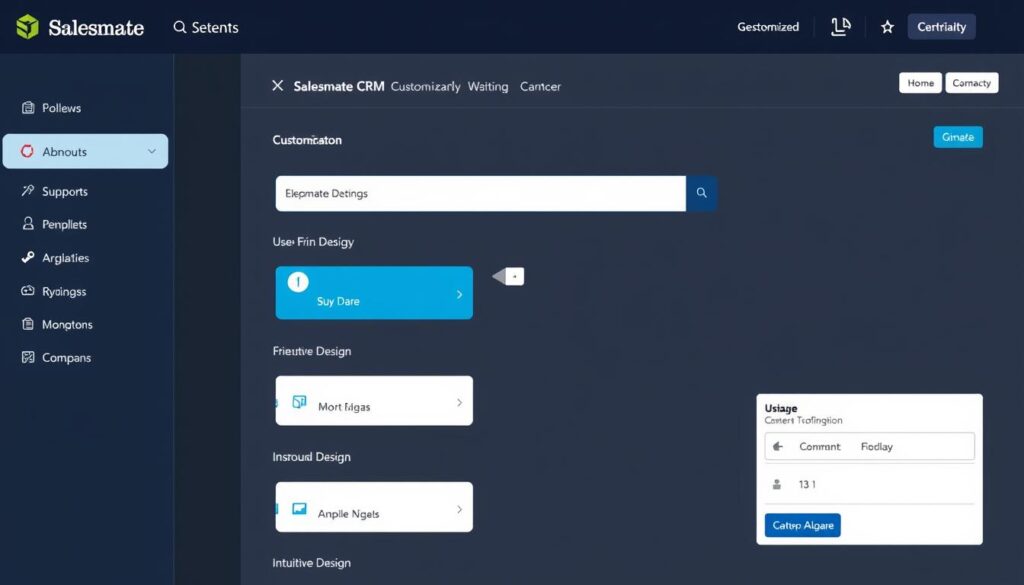
Salesmate has earned recognition for its exceptional customization capabilities, allowing businesses to tailor nearly every aspect of the CRM experience to match their specific sales processes and terminology. Its built-in telephony, SMS, and email features create a comprehensive communication hub.
Insightly: End-to-End Workflow Management
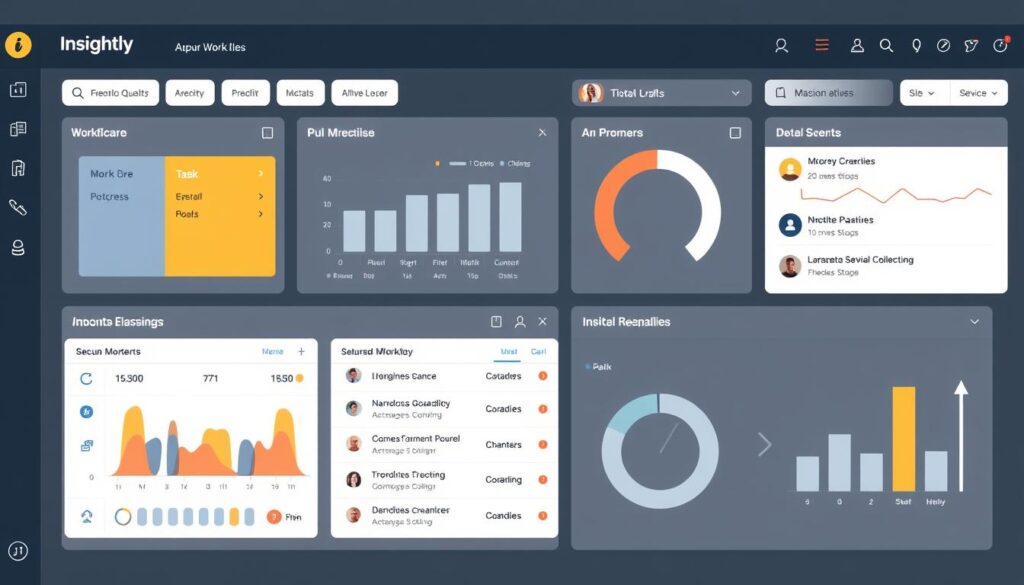
Insightly differentiates itself through robust end-to-end workflow management that extends beyond traditional CRM boundaries into project delivery. This makes it ideal for service businesses that need to track client engagements from opportunity to completion.
Less Annoying CRM: Simple Solution for Micro Teams
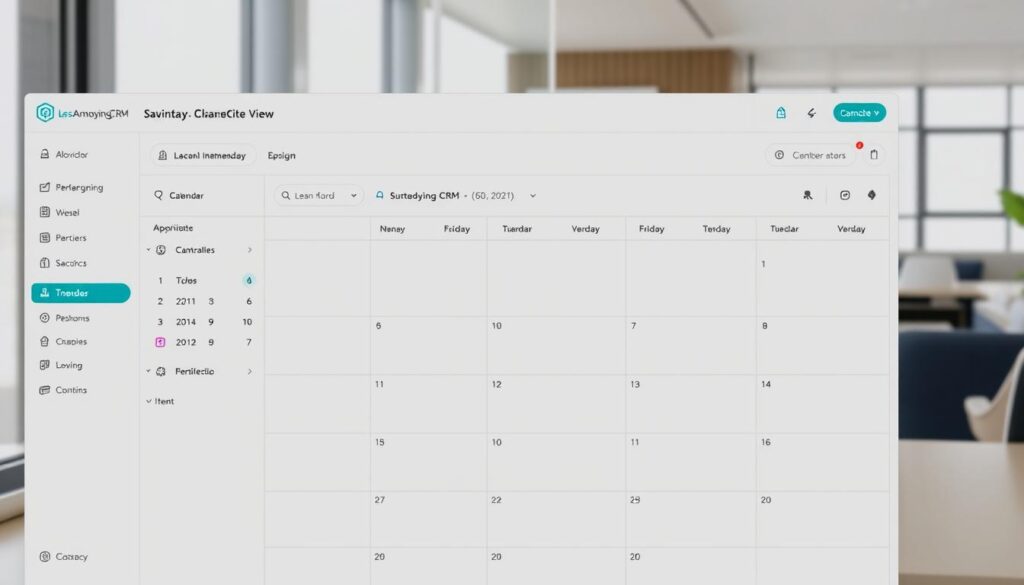
Less Annoying CRM lives up to its name by offering a refreshingly straightforward approach to customer relationship management. Its calendar-centric approach helps micro teams stay organized with minimal effort.
These additional top-rated CRM solutions offer businesses a range of options to enhance their customer service, sales, and overall customer relationship management capabilities. By considering these platforms, businesses can find the best fit for their specific needs and improve their overall performance.
How to Choose the Right CRM for Your Business
With numerous CRM options available, selecting the right one for your business requires careful consideration of your specific needs. The process involves evaluating various factors, including your sales process complexity, team size, and growth projections.
Assessing Your Specific Business Requirements
Begin by documenting your current sales workflow and identifying pain points that a CRM should address. Prioritize features based on which problems would deliver the greatest impact when solved. Consider your team’s technical proficiency when evaluating CRM options, as even the most powerful software will fail if adoption is poor due to overly complex interfaces or excessive training requirements.
Key considerations include:
- Sales process complexity
- Team size and structure
- Growth projections and scalability needs
- Integration requirements with existing systems
Evaluating Pricing vs. Features
When comparing pricing plans across different CRM vendors, look beyond the monthly per-user cost. Consider implementation fees, data migration expenses, potential add-ons, and scaling costs as your business grows. Free plans can provide excellent value for small businesses, but carefully review limitations on contacts, storage, automation capabilities, and user counts to ensure they won’t become restrictive as you scale.
It’s crucial to balance the cost with the features that matter most to your business.
Testing Before Committing
Take advantage of free trials and demonstrations to evaluate how each platform handles your specific use cases. Involve key stakeholders from sales, marketing, and customer service in the testing process. Consider the total cost of ownership over a 3-5 year period rather than focusing solely on initial implementation costs, as switching CRM systems later can be disruptive and expensive.
Implementation Best Practices for CRM Success
A successful CRM implementation requires a strategic approach that aligns with your business goals. To maximize the benefits of your CRM software, it’s essential to consider several key factors, including team readiness, data quality, and integration with existing systems.
Effective Team Onboarding Strategies
Onboarding your team effectively is crucial for the successful adoption of your new CRM system. This involves developing a comprehensive training program that addresses different learning styles and user roles. Consider including hands-on workshops, video tutorials, and reference materials that users can access when needed. By investing time in proper training, you can ensure that your team is equipped to use the CRM software efficiently.
- Develop a phased training approach to avoid overwhelming your team.
- Provide ongoing support to address any questions or concerns.
- Encourage feedback to identify areas for improvement.
Integration with Your Existing Tech Stack
Integration is a critical aspect of CRM implementation, as it enables seamless workflows across your tech stack. To achieve this, plan your integration strategy carefully, prioritizing connections with mission-critical systems like email, marketing automation, and accounting software. By doing so, you can create a unified system that enhances productivity and reduces manual errors.
- Identifying the systems that need to be integrated with your CRM.
- Evaluating the compatibility of your CRM with other systems.
- Developing a plan for data migration and synchronization.
Data Migration Considerations
Data migration is a critical step in CRM implementation, as it involves transferring existing customer data into the new system. To ensure a smooth transition, invest time in data cleansing before migration to prevent transferring inaccurate or duplicate information. Establishing data quality standards will help maintain data integrity over time.
By following these best practices, you can ensure a successful CRM implementation that meets your business needs and enhances your customer relationships.
Conclusion: Maximizing ROI from Your CRM Investment
Maximizing ROI from your CRM investment requires not just selecting the right software, but also integrating it effectively into your business operations. The best CRM software for your specific needs can transform customer relationships, streamline sales processes, and drive sustainable growth.
The return on investment from your CRM implementation will be determined by how thoroughly you integrate it into your daily operations and company culture. Regular measurement against pre-established key performance indicators is essential for quantifying your CRM’s impact on critical metrics like lead conversion rates, sales cycle length, customer retention, and revenue growth.
The most successful organizations view their CRM not as a static tool but as an evolving platform that requires ongoing optimization, regular training refreshers, and periodic reassessment of workflows as business needs change. Consider establishing a CRM champion within your organization who can drive adoption, collect feedback, and advocate for improvements that keep the system aligned with evolving business requirements.
It’s also important to remember that even the best CRM software is ultimately a tool for enhancing human relationships, not replacing them. The most successful implementations balance automation efficiency with maintaining authentic customer connections. As AI capabilities continue to advance within CRM platforms, stay informed about new features that could further enhance your customer relationship management strategy and provide competitive advantages in your market.
By implementing these strategies and maintaining a focus on your business goals, you can maximize the ROI from your CRM investment and drive long-term success. The key is to remain adaptable, continually assessing and improving your CRM strategy to meet the evolving needs of your business and your customers.