Driving in Colorado comes with its unique set of challenges, from navigating mountainous terrains to dealing with severe weather conditions and urban traffic. Having the right auto insurance is not just a legal necessity, but a crucial protection for drivers.
Colorado law mandates that drivers have car insurance that includes bodily injury liability, property damage liability, uninsured motorist bodily injury, and medical payments coverage. The average driver in Colorado pays $2,337 annually for their auto insurance.
This guide is designed to help Colorado residents understand the insurance requirements, compare rates, and find ways to save money while maintaining proper coverage. By comparing quotes from multiple providers, drivers can ensure they’re getting the best rate for their specific situation.
Understanding Colorado Car Insurance Requirements
To drive legally in Colorado, it’s essential to comprehend the state’s car insurance requirements and how they apply to you. Colorado operates under a tort system, where at-fault drivers are responsible for damages they cause in accidents. This system underscores the importance of having adequate auto insurance coverage.
The state mandates that drivers carry liability insurance with specific minimum limits. These limits are $25,000 per person and $50,000 per accident for bodily injury, and $15,000 per accident for property damage, often represented as 25/50/15.
Minimum Liability Coverage in Colorado
The minimum liability coverage in Colorado is designed to ensure that drivers can cover the costs associated with accidents they cause. This includes bodily injury liability and property damage liability. Drivers must have at least $25,000 in bodily injury liability coverage per person and $50,000 per accident, along with $15,000 in property damage liability coverage per accident.
Uninsured Motorist and Medical Payments Coverage
In addition to liability insurance, Colorado drivers are also required to have uninsured motorist coverage with limits of $25,000 per person and $50,000 per accident. This coverage protects drivers if they’re involved in an accident with someone who doesn’t have insurance or in a hit-and-run situation. Furthermore, medical payments coverage of $5,000 per accident is mandatory, though drivers can reject these coverages by signing an option form. Medical payments coverage helps pay for medical expenses regardless of fault.
- Colorado’s insurance requirements are designed to protect drivers and ensure they can cover costs associated with accidents.
- The state’s minimum liability coverage limits are 25/50/15 for bodily injury and property damage.
- Uninsured motorist coverage and medical payments coverage are also mandatory, providing additional protection for drivers.
- Driving without proper insurance in Colorado can lead to serious penalties, including fines and license suspension.
It’s crucial to note that while these are the minimum requirements, many drivers choose to purchase higher limits to ensure better protection. Understanding and complying with Colorado’s car insurance requirements is vital for legal and financial security.
Colorado Minimum Car Insurance Requirements

Colorado drivers need to be aware of the minimum car insurance requirements to avoid penalties. The state mandates specific coverage limits to ensure that drivers can cover the costs of damages in the event of an accident.
Bodily Injury Liability
Bodily injury liability coverage is a critical component of Colorado’s minimum car insurance requirements. It covers medical expenses, lost wages, and pain and suffering for others injured in accidents you cause. The minimum requirement is $25,000 per person and $50,000 per accident.
Property Damage Liability
Property damage liability coverage pays for repairs to other people’s vehicles or property when you’re at fault in an accident. Colorado requires a minimum of $15,000 per accident. This coverage is essential for protecting your financial assets in case of an accident.
Optional but Recommended Coverages
While Colorado’s minimum requirements provide some protection, they may not be sufficient in serious accidents. Optional coverages like comprehensive, collision, rental car coverage, and roadside assistance can provide additional financial protection. Comprehensive coverage protects against non-collision incidents, while collision coverage pays for repairs to your vehicle after an accident, regardless of fault.
Average Cost of Car Insurance in Colorado
Understanding the average cost of car insurance in Colorado can help drivers make informed decisions. The average cost was $1,687 in 2021, according to thezebra.com, which is 10% higher than the national average. Another source indicates the average is $2,337 per year.
Factors Affecting Your Premium
Several factors influence your car insurance premium in Colorado, including your driving history, age, credit score, and location. Urban areas like Denver and Colorado Springs tend to have higher rates due to increased traffic density.
Colorado Rates Compared to National Average
Colorado’s car insurance rates are higher than the national average due to factors like mountain driving conditions and severe weather. Shopping around and comparing quotes is essential to find the best rate for your situation.
Insurance companies weigh factors differently, leading to varied rates between providers. It’s crucial to compare policies to find the best fit.
How to Compare Car Insurance Colorado Quotes

When it comes to car insurance in Colorado, comparing quotes is essential to securing the right coverage at the lowest price. To effectively compare car insurance quotes, you need to ensure that each quote includes the same coverage types and limits, as well as the same number of cars and drivers.
What to Look for When Comparing Policies
Comparing “apples to apples” is crucial. Ensure all quotes have the same deductibles and coverage limits. Beyond price, consider the insurance company’s financial stability, customer service reputation, and claims satisfaction ratings. Also, look into available discounts that can lower your premium.
Online Comparison Tools and Resources
Utilize online comparison tools to gather multiple quotes simultaneously. These tools simplify the comparison process, saving you time and effort. Additionally, review policy details carefully, including exclusions and limitations that might affect your coverage.
Timing your comparisons around life changes, such as moving or adding a vehicle, can be beneficial as these changes impact your premiums. It’s also recommended to check with the Colorado Division of Insurance for company complaint ratios and other helpful consumer information before making a final decision.
Top Ways to Save on Car Insurance in Colorado
Saving on car insurance in Colorado is achievable through a combination of smart driving habits and savvy insurance choices.

Available Discounts from Major Insurers
Colorado drivers can benefit from various discounts offered by major insurers, including multi-policy discounts for bundling auto with home or renters insurance, and good student discounts for students with B averages or higher.
Some insurers also offer telematics programs that track driving behavior and reward safe driving with lower rates.
Safe Driver Programs and Telematics
Maintaining a clean driving record is one of the most effective ways to keep insurance costs down in Colorado. Insurers offer safe driver discounts to drivers with a history of safe driving.
Telematics and usage-based insurance programs allow insurers to track driving habits through mobile apps or devices, providing discounts for safe driving practices.
Penalties for Driving Without Insurance in Colorado
Colorado law enforcement takes driving without insurance very seriously, imposing substantial penalties on those caught. The state requires all drivers to have a minimum level of auto insurance to operate a vehicle legally.

First Offense Consequences
For a first offense of driving without insurance in Colorado, drivers face a minimum fine of $500. Additionally, they may experience up to 4 months of driver’s license suspension and receive 4 points on their driving record. An SR-22 filing requirement is also mandated for up to three years, which can significantly impact auto insurance premiums.
- A minimum fine of $500
- Up to 4 months of license suspension
- 4 points on the driving record
- SR-22 filing requirement for up to three years
Repeat Offense Penalties
For repeat offenders, the penalties escalate substantially. Fines increase, driver license suspensions lengthen, and additional requirements are imposed. The amount of the fine and the duration of the suspension depend on the number of previous offenses.
- Higher fines for subsequent offenses
- Longer license suspensions
- Continued SR-22 requirements
- Potential vehicle impoundment
Beyond the legal penalties, driving without insurance leaves drivers financially vulnerable to lawsuits and personally responsible for damages if they cause an accident. This can lead to a significant financial burden, far exceeding the cost of maintaining proper insurance coverage.
Insurance violations remain on the driving record and can affect insurance rates for years to come. The process for reinstating a suspended license after an insurance violation involves fees and specific documentation requirements, including proof of insurance and payment of reinstatement fees.
Colorado law enforcement can verify insurance electronically during traffic stops, making it difficult to evade detection. Thus, maintaining a valid auto insurance policy is crucial for compliant drivers.
SR-22 Requirements in Colorado
The SR-22 requirement in Colorado serves as a critical checkpoint for high-risk drivers, ensuring they maintain the necessary insurance coverage.
When Is an SR-22 Required?
An SR-22 is typically required in Colorado when a driver has been involved in certain infractions such as DUIs, driving without insurance, accumulating too many points on their license, or being involved in an accident while uninsured.
How to Obtain an SR-22 in Colorado
To obtain an SR-22, Colorado drivers must first secure an auto insurance policy that meets the state’s minimum liability requirements. The insurance company will then file the SR-22 form with the Colorado DMV on behalf of the driver license holder.
It’s essential to maintain continuous insurance coverage for the specified amount of time, usually three years, to avoid further license suspension. Failure to comply can result in the insurance company notifying the DMV, leading to re-suspension of driving privileges.
Drivers with an SR-22 requirement should compare insurance quotes from multiple providers to find the most affordable rate. It’s also crucial to check with the Colorado DMV to determine when the SR-22 requirement can be lifted.
Colorado Teen Driver Insurance Information

Colorado teen drivers face unique insurance challenges that require careful consideration. To navigate these challenges, it’s essential to understand the licensing process and insurance options available.
Licensing Process for Teen Drivers
In Colorado, teens must start driver’s education before age 15 to get their license on their 16th birthday. The state requires teens to hold a learner’s permit for at least 12 months before applying for a driver’s license. This graduated licensing program is designed to ensure teen drivers gain sufficient experience behind the wheel.
Insurance Considerations for Young Drivers
Teen drivers face significantly higher car insurance rates due to their lack of driving experience. Parents can help manage these costs by taking advantage of good student discounts, enrolling their teens in driver training programs, and considering occasional driver status. The type of vehicle insured also impacts rates, with practical, safe vehicles typically costing less to insure.
Colorado law prohibits drivers under 18 from using a mobile phone while driving unless it’s to contact emergency services. This restriction, along with passenger limitations and curfew restrictions, aims to reduce the risk associated with teen driving. Insurance companies consider these factors when determining auto insurance rates for teen drivers.
By understanding these regulations and insurance considerations, parents and teen drivers can make informed decisions to ensure they have the right car insurance coverage.
Additional Coverage Options for Colorado Drivers
Beyond the mandatory liability coverage, Colorado drivers can choose from a range of optional insurance coverages to enhance their car insurance policies. These additional coverages provide extra protection against various risks associated with driving in Colorado.
Comprehensive and Collision Coverage
Colorado drivers can benefit from Comprehensive coverage, which protects against theft, vandalism, weather damage, and animal collisions. This coverage is particularly valuable in Colorado due to the state’s severe weather events and wildlife hazards. Collision coverage pays for repairs to your vehicle after an accident, regardless of fault, making it essential for drivers in Colorado’s challenging driving conditions.
- Comprehensive coverage includes protection against natural disasters and animal-related damages.
- Collision coverage ensures your vehicle is repaired or replaced after an accident.
Roadside Assistance and Rental Car Coverage
In addition to the above coverages, Colorado drivers can opt for Roadside Assistance, which is particularly beneficial for those who frequently travel through remote mountain areas or during winter conditions. Rental Car coverage helps cover transportation costs while your vehicle is being repaired after a covered claim.
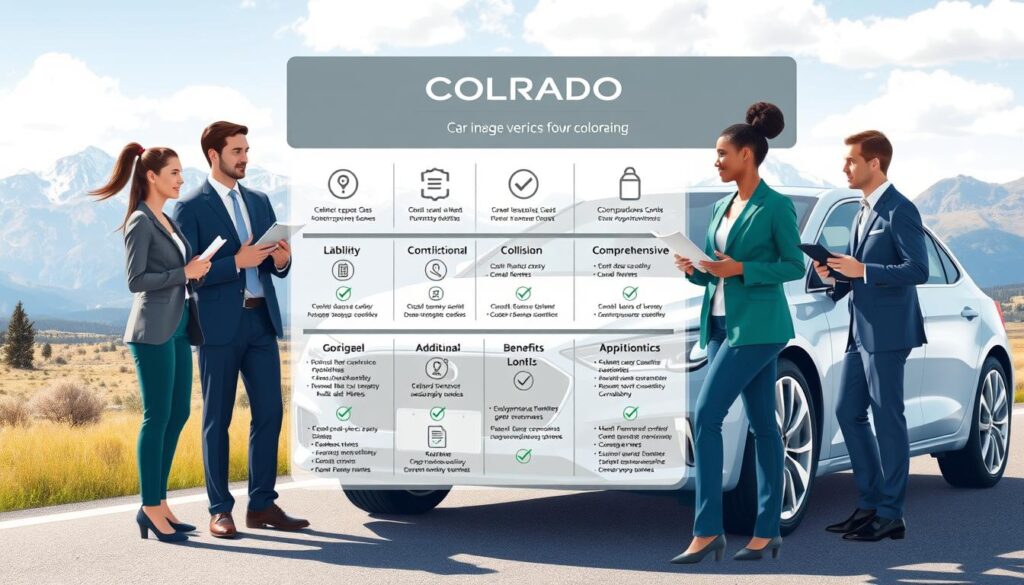
Other valuable options include Gap insurance for drivers with new or leased vehicles, Custom Equipment coverage for those with aftermarket modifications, and Umbrella policies for additional liability protection. By combining these optional coverages, Colorado drivers can create a comprehensive protection package tailored to the state’s unique driving environment.
Conclusion
Colorado’s unique driving conditions make it essential for drivers to have the right car insurance coverage. To drive legally, Colorado drivers must meet the state’s minimum insurance requirements. Comparing car insurance quotes from multiple providers can help drivers find the best coverage at competitive rates. Maintaining a clean driving record is key to keeping insurance costs down. Drivers should review their policies regularly and take advantage of available discounts to lower their premiums. By doing so, they can ensure they have the right coverage for their needs and budget, potentially saving hundreds of dollars.