In today’s competitive business landscape, managing customer relationships effectively is crucial for driving growth and improving profitability. A robust CRM system helps companies stay connected to their customers, streamline processes, and make informed decisions.
This comprehensive guide explores the top CRM features, pricing structures, and user reviews to help you make an informed decision. Modern CRM systems have evolved to incorporate AI capabilities, automation features, and integrated tools that enhance customer service and streamline sales processes.
By centralizing customer data and providing actionable analytics, the right CRM platform can significantly improve team collaboration and drive business decisions. Whether you’re a small business or an enterprise, this guide will provide valuable insights into the current CRM landscape.
Understanding CRM Platforms in 2023
In today’s complex business landscape, understanding CRM platforms is crucial for companies aiming to stay ahead. The average organization uses close to 900 different applications, but only 29% of these apps are integrated. This lack of integration can lead to fragmented customer data and inefficient business processes.
What is a CRM Platform?
A CRM (Customer Relationship Management) platform is a technology that helps businesses manage their interactions with customers and potential customers. It provides a unified view of customer data across all touchpoints and departments, enabling companies to make informed decisions. By centralizing customer information, businesses can identify patterns, track sales opportunities, and develop targeted marketing strategies PageSpeed Insights.
Why CRM Platforms Matter for Business Growth
CRM platforms have become essential tools for business growth as they provide several key benefits. Companies using effective CRM systems report significant improvements in customer retention rates, which directly impacts long-term profitability and business stability. In today’s data-driven business environment, CRM platforms provide the analytical capabilities needed to understand customer behavior and preferences at scale.
By streamlining business processes and automating routine tasks, CRM systems allow teams to focus on high-value activities that contribute directly to business growth. With the increasing complexity of business operations and customer expectations, CRM platforms provide the structure needed to maintain consistent customer experiences across all interaction points.
- Centralizing customer data to identify patterns and track sales opportunities.
- Developing targeted marketing strategies that drive revenue growth.
- Improving customer retention rates for long-term profitability.
- Streamlining business processes through automation.
Key Benefits of Using a CRM Platform
CRM platforms offer numerous benefits that can significantly enhance business operations. By integrating various Page Page-level & keyword-level optimizations, businesses can streamline their processes, improve customer interactions, and drive growth.
Centralized Customer Data Management
A good CRM system gathers information from a wide range of sources across the business and beyond, providing a comprehensive view of each customer. This centralized data management enables businesses to access customer data in one place, reducing the complexity of managing disparate data sources. As noted by industry experts, “A CRM system serves as a listening engine, helping businesses understand customer sentiments and preferences.”
Improved Team Collaboration
CRM platforms facilitate seamless collaboration among team members by providing a shared platform for customer data and sales processes. This leads to improved communication, reduced duplication of efforts, and enhanced overall efficiency. With a CRM, teams can work together more effectively, ensuring that customer needs are met promptly and efficiently.

Enhanced Customer Experience
By leveraging the data and analytics capabilities of a CRM platform, businesses can gain a deeper understanding of their customers’ needs and preferences. This enables them to tailor their offerings and interactions to meet customer expectations, leading to an enhanced customer experience. As a result, businesses can build stronger, more meaningful relationships with their customers.
Data-Driven Decision Making
CRM platforms transform raw customer data into actionable insights through robust reporting and analytics capabilities. This enables business leaders to make more informed strategic decisions based on concrete data rather than intuition or incomplete information. For instance, CRM analytics can identify patterns and trends in customer behavior and sales performance, allowing for more accurate sales forecasting.
As highlighted in industry insights, “Data-driven decision making extends beyond sales to impact product development, marketing strategies, and resource allocation across the organization.” By adopting a CRM platform, businesses can unlock the full potential of their customer data, driving growth and improvement across the organization.
Essential Features to Look for in a CRM Platform
When selecting a CRM platform, it’s crucial to consider the features that will enhance your business operations. A robust CRM system can streamline processes, improve customer satisfaction, and drive growth. But what makes a CRM platform truly effective?
Contact and Sales Management
Effective contact and sales management are at the heart of any CRM system. Look for a platform that allows you to organize and manage customer interactions across multiple channels. This includes contact profiling, sales pipeline management, and sales forecasting. A good CRM should enable your sales team to track leads, manage opportunities, and close deals more efficiently. As noted by CRM experts, “A well-implemented CRM can increase sales productivity by up to 30%.”
A CRM platform with strong contact and sales management capabilities will help you stay on top of customer interactions and sales performance. This can lead to improved customer satisfaction and increased revenue.
Marketing Automation Capabilities
Marketing automation is another key feature to look for in a CRM platform. It allows you to automate repetitive marketing tasks, such as email campaigns and lead nurturing. By automating these tasks, you can free up more time for strategic marketing initiatives. According to a recent study, businesses that use marketing automation see a significant increase in lead generation and conversion rates.
When evaluating CRM platforms, consider the level of marketing automation they offer. Look for features like customizable workflows, lead scoring, and campaign tracking.
Reporting and Analytics Tools
To make informed decisions, you need access to accurate and timely data. That’s where reporting and analytics tools come in. A good CRM platform should provide a range of reporting tools, from sales performance to customer behavior. Look for platforms that offer customizable dashboards, real-time analytics, and data visualization tools. As Forbes notes, “Data-driven decision-making is key to business success in today’s fast-paced business environment.”
With the right reporting and analytics tools, you can gain valuable insights into your business performance and make data-driven decisions.
Integration Possibilities Page 4h3>
The ability to integrate with other business applications is essential for creating a cohesive technology ecosystem that maximizes efficiency. Look for CRM platforms with pre-built integrations for popular business tools like email clients, accounting software, marketing platforms, and e-commerce systems. API availability ensures that custom integrations can be developed for specialized tools specific to your industry or business processes.
- Two-way data synchronization between integrated applications prevents duplicate data entry and ensures consistency across systems.
- Mobile integration capabilities allow team members to access and update CRM data from anywhere, maintaining productivity while working remotely or in the field.
By considering these essential features, you can find a CRM platform that meets your business needs and drives growth.
How AI is Transforming CRM Platforms in 2023
AI technology is transforming the way CRM platforms function, offering businesses unprecedented insights and automation capabilities. This transformation is significantly impacting how companies manage their customer relationships, sales processes, and overall business strategies.
AI-Powered Analytics and Insights
AI-powered analytics is revolutionizing the way businesses understand their customer data. By analyzing vast amounts of information, AI algorithms can identify patterns and provide valuable insights that help businesses make informed decisions. This enables companies to better understand their customers’ needs and preferences, ultimately leading to improved customer satisfaction and loyalty.
Automated Task Management
AI is also automating routine tasks within CRM platforms, freeing up more time for sales teams to focus on high-value activities. Automated task management includes lead assignment, follow-up reminders, and data entry, reducing the administrative burden on sales representatives. This automation not only increases efficiency but also reduces the likelihood of human error, ensuring that customer interactions are timely and relevant.
Predictive Sales Forecasting
Predictive sales forecasting is another area where AI is making a significant impact. By analyzing historical sales data and identifying patterns, AI algorithms can predict future sales outcomes. This includes forecasting quarterly sales targets, ecommerce sales, and the best times to send marketing emails. The use of AI in sales forecasting enables businesses to make more accurate predictions, better manage their pipeline, and ultimately drive more sales.
- Predictive sales forecasting uses AI algorithms to analyze historical data and identify patterns that indicate likely future outcomes.
- These advanced forecasting tools consider multiple variables beyond simple pipeline values, including deal velocity, seasonal trends, and individual sales representative performance.
- AI can assess the health of deals in the pipeline and assign probability scores based on similar past deals, providing more realistic revenue projections.
Salesforce Sales Cloud: The Enterprise Solution
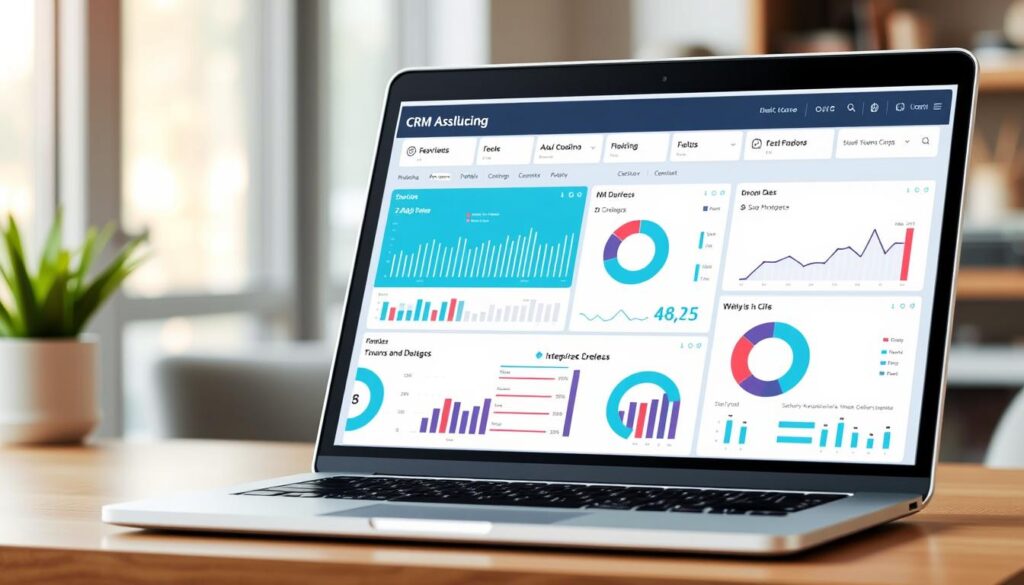
Enterprise companies rely on Salesforce Sales Cloud for its robust features and scalability. As a leading CRM platform, it offers a comprehensive suite of tools designed to enhance sales productivity and streamline business processes.
Key Features and Capabilities
Salesforce Sales Cloud boasts an extensive range of features that cater to the complex needs of enterprise businesses. These include advanced sales analytics, customizable sales processes, and seamless integration with other Salesforce products. The platform’s flexibility allows businesses to tailor it to their specific requirements, making it an ideal choice for companies looking to scale.
The key features of Salesforce Sales Cloud include:
- Comprehensive sales analytics and forecasting tools
- Customizable sales processes and workflows
- Seamless integration with other Salesforce products and third-party apps
- Mobile access for sales teams on-the-go
Pricing Structure
Salesforce Sales Cloud offers a tiered pricing structure to accommodate the diverse needs of enterprise businesses. The pricing varies based on the number of users and the specific features required. While the exact pricing may vary, Salesforce provides a range of plans to suit different business sizes and needs.
User Reviews and Performance
User reviews consistently highlight Salesforce Sales Cloud’s comprehensive feature set and scalability as major strengths. Many users praise the platform’s customization capabilities, which allow businesses to tailor the CRM to their specific industry requirements and sales processes. While some reviews note a steeper learning curve, the platform’s powerful capabilities often offset this once mastered.
Performance metrics from existing customers demonstrate significant ROI, with many reporting substantial increases in sales productivity, lead conversion rates, and revenue growth after implementation.
HubSpot: The Versatile All-in-One CRM

In the realm of CRM platforms, HubSpot has carved a niche for itself by providing a versatile and integrated system for businesses. The platform itself is a breeze to use and easy to navigate, which is surprising considering the mountain of tools you have at your disposal.
Key Features and Capabilities
HubSpot’s CRM offers a wide range of features that cater to the diverse needs of businesses. User reviews consistently praise its intuitive interface, making it easy for new team members to become productive quickly. The platform integrates marketing, sales, and service tools, providing a holistic approach to customer relationship management.
Some of the key features include contact and sales management, marketing automation capabilities, and reporting and analytics tools. These features enable businesses to manage their customer interactions more effectively and make data-driven decisions.
Pricing Structure
HubSpot offers a tiered pricing structure, with a free version available for basic needs. The starter tiers are generous, but costs can increase significantly when upgrading to professional or enterprise levels with multiple hubs. This scalability makes it suitable for businesses of various sizes.
User Reviews and Performance
Users praise HubSpot for its ease of use and the value of having multiple tools in one system. Performance metrics often highlight improvements in lead quality, sales cycle length, and customer retention after implementing the platform. However, some reviews note limitations in lower-tier plans, with certain features only available at higher price points.
Zoho CRM: AI-Powered Customer Management

Zoho CRM is recognized for its AI-driven customer management features that cater to diverse business needs. At its core, Zoho CRM is a powerful application that compensates for its less-than-exceptional user interface with an impressive feature set, including sales, marketing, help desk, social, and multichannel marketing capabilities.
Key Features and Capabilities
Zoho CRM’s feature set is robust, offering extensive customization options that allow businesses to tailor the CRM to their specific industry needs without requiring extensive developer resources. The platform’s ability to integrate seamlessly with other Zoho products creates a comprehensive ecosystem that centralizes business operations.
The AI-powered features enhance customer management by providing advanced analytics and insights, enabling businesses to make informed decisions.
Pricing Structure
Zoho CRM offers accessible pricing plans that cater to businesses of various sizes. The scalability of the platform allows small and medium-sized businesses to start with basic features and expand as they grow, making it a cost-effective solution.
User Reviews and Performance
User reviews frequently highlight Zoho CRM’s value proposition, praising its robust functionality at a more accessible price point than many competitors. The integration with other Zoho applications is also commended for creating a seamless ecosystem that users find valuable for centralizing business operations.
Some reviews note that the user interface, while functional, isn’t as intuitive as some competitors, potentially requiring more training for new users.
Pipedrive: User-Friendly Sales Management

Designed with sales professionals in mind, Pipedrive offers an intuitive sales management experience that helps teams stay organized and focused on closing deals. The platform’s user-friendly interface is a standout feature, making it easy for new users to get started quickly.
Key Features and Capabilities
Pipedrive’s strength lies in its visual pipeline view, providing clear visibility into deal status and next steps at a glance. The main menu is straightforward, with icons directing users to every part of the app. Some main screens offer a sub-menu with icons and text labels, ensuring that users can easily find the settings and action buttons they need.
The platform’s focus on simplicity and core sales functionality means that users aren’t overwhelmed with unnecessary features. This streamlined approach helps sales teams adapt quickly to the platform, improving overall sales organization and follow-through.
Pricing Structure
Pipedrive offers a transparent pricing structure that scales with business needs. While specific pricing details aren’t provided in the initial overview, the platform is generally considered to offer competitive pricing for the value it provides to sales teams.
User Reviews and Performance
User reviews consistently highlight Pipedrive’s intuitive interface as its greatest strength. Many users note how quickly their sales teams adapted to the platform, appreciating the visual pipeline that helps manage deals effectively. While some mention that Pipedrive excels at sales management, businesses needing robust marketing or service capabilities may need to supplement with additional tools.
Microsoft Dynamics 365: Comprehensive Business Solution

Microsoft Dynamics 365 offers a holistic approach to customer relationship management and beyond. It’s designed to help businesses streamline their operations, enhance customer interactions, and drive growth.
Key Features and Capabilities
Microsoft Dynamics 365 is packed with features that cater to the diverse needs of businesses. Its comprehensive capabilities include sales, marketing, and customer service tools, all integrated within a single platform. The deep integration with other Microsoft products, such as Office 365 and Power Platform, enhances productivity and reduces the complexity of managing multiple tools.
Users appreciate the platform’s flexibility and customization options, which allow it to be tailored to specific business processes and industry requirements. This adaptability is crucial for companies looking to implement a CRM that aligns with their unique operational needs.
Pricing Structure
The pricing for Microsoft Dynamics 365 varies based on the specific modules and features required by a business. It’s known for its scalability, making it suitable for both small businesses and large enterprises. Companies should contact Microsoft or an authorized partner for a customized quote.
User Reviews and Performance
User reviews of Microsoft Dynamics 365 frequently highlight its comprehensive capabilities and integration with other Microsoft products as key advantages. Enterprise organizations value its scalability and security features, supporting complex global implementations. While some users note a steeper learning curve compared to competitors, many organizations invest in training to maximize their implementation.
Freshworks CRM: AI-Enhanced Sales and Marketing

Freshworks CRM stands out for its innovative use of AI in sales and marketing processes. By integrating AI capabilities, it enhances the user experience and streamlines sales operations.
Key Features and Capabilities
Freshworks CRM boasts a range of features that make it an attractive option for businesses. Its AI-driven insights provide users with actionable information without requiring extensive data science knowledge. The platform’s intuitive interface reduces the time needed for training, allowing teams to adopt it quickly. Additionally, the built-in communication tools eliminate the need to switch between applications, making the sales process more efficient.
Pricing Structure
Freshworks CRM offers a competitive pricing structure that provides value for money. The platform’s pricing is more accessible than some enterprise competitors, making it an attractive option for small to mid-sized businesses. While very large enterprises might find some limitations, the pricing model is generally considered reasonable for the features provided.
User Reviews and Performance
User reviews consistently praise Freshworks CRM for its clean and intuitive interface, which enhances user adoption. Sales teams appreciate the built-in communication tools that streamline their workflow. The AI capabilities are also commended for providing valuable insights. Overall, Freshworks CRM is seen as a robust solution for sales and marketing, particularly for smaller businesses.
Keap: Automation-Focused Small Business CRM

With its robust automation capabilities, Keap has become a go-to CRM for small businesses seeking to optimize their workflows. Keap (formerly Infusionsoft) excels at automating repeatable business processes, which can save around 10 hours of work per week.
Key Features and Capabilities
Keap’s powerful automation features allow businesses to streamline their operations, particularly for small businesses with limited staff. The platform’s automated workflows for lead nurturing and customer follow-up have been reported to save users significant time. Additionally, Keap offers an all-in-one solution, combining CRM, marketing, and e-commerce functionalities, which receives positive feedback from small business owners looking to consolidate their tech stack.
Pricing Structure
While specific pricing details are not provided, Keap’s pricing structure is designed to accommodate the needs of small businesses. The platform offers various plans that cater to different business requirements, ensuring that users can find a suitable option.
User Reviews and Performance
User reviews consistently highlight Keap’s automation capabilities as its greatest strength. Many users report significant benefits from implementing the platform’s automated workflows. However, some reviews mention a steeper learning curve compared to simpler CRM solutions, though this is often offset by the platform’s comprehensive capabilities. The company’s implementation services receive praise for helping new users configure the system to their specific business needs.
Overall, Keap’s automation-focused CRM platform is designed to help small businesses save time and increase efficiency by automating repetitive tasks, making it an attractive solution for businesses looking to streamline their operations and improve their overall user experience.
Nimble: Social Media Integration Specialist

Nimble’s strength lies in its ability to seamlessly integrate social media into its CRM system, making it an ideal choice for businesses that rely heavily on social media for customer engagement.
Key Features and Capabilities
Nimble CRM excels in providing a unified platform for managing contacts and social media interactions. Users praise its automatic contact enrichment features, which save valuable research time and provide context for sales conversations. The browser extension is also commended for making CRM data accessible online.
Pricing Structure
Nimble offers a competitive pricing structure, catering to businesses of various sizes. While specific pricing details aren’t provided here, it’s advisable to check Nimble’s official website for the most current information.
User Reviews and Performance
User reviews frequently highlight Nimble’s social media integration capabilities, noting how it streamlines relationship building. Users from smaller organizations appreciate the focus on relationship management over complex sales processes.
Choosing the Right CRM Platform for Your Business
With numerous CRM options available, choosing the right platform for your business requires careful consideration of several key factors. The process involves more than just comparing features and pricing; it demands a thorough understanding of your business needs and how a CRM can address them.
Assessing Your Business Needs
Before diving into the world of CRM platforms, it’s essential to assess your business needs. This involves identifying your goals, understanding your customer interactions, and determining the functionalities you require from a CRM. Consider the size of your team and how they will use the CRM, as well as the type of customer data you need to manage. Evaluating your current processes and pain points will help you find a CRM that aligns with your business objectives.
Scalability Considerations
As your business grows, your CRM needs will evolve. Therefore, it’s crucial to consider the scalability of the CRM platform you’re evaluating. Think about the time it will take to scale up or down and how the CRM will adapt to your changing needs. A scalable CRM should be able to handle increased data and user demands without compromising performance. Look for platforms that offer flexible pricing plans and can grow with your business.
Implementation and Training Requirements
Successful CRM implementation requires careful planning and resource allocation beyond the software subscription itself. Consider the time required for data migration from existing systems, including cleaning and formatting data to ensure accuracy in the new platform. Evaluate the training requirements for your team, factoring in their technical proficiency and availability for learning a new system. Assess whether you have internal resources to manage the implementation or if you’ll need external consultants or the vendor’s professional services. Look for platforms with robust onboarding programs, training resources, and support options to facilitate a smooth transition. Consider the potential disruption to existing processes during implementation and develop a change management strategy to maintain productivity.
By carefully assessing your business needs, considering scalability, and planning for implementation and training, you can choose a CRM platform that not only meets your current requirements but also supports your future growth.
CRM Platform Implementation Best Practices
To get the most out of a CRM platform, businesses must focus on effective implementation strategies. A well-planned implementation ensures that the CRM system meets the organization’s specific needs and is adopted smoothly by users.
Data Migration Strategies
Effective data migration is crucial for a successful CRM implementation. This involves transferring existing customer data into the new system accurately and efficiently. Businesses should clean and organize their data before migration to avoid duplicating efforts and ensure data integrity.
- Identify and prioritize the data to be migrated
- Clean and deduplicate existing data
- Map data fields to the new CRM system
User Training and Adoption
User adoption is a critical factor in the success of a CRM implementation. Providing comprehensive user training helps employees understand how to use the system effectively and maximizes its benefits. Training should be ongoing and tailored to different user roles.
To encourage adoption, businesses should also:
- Communicate the benefits of the CRM system to users
- Provide incentives for using the CRM system
- Monitor usage and address any issues promptly
Measuring ROI from Your CRM Investment
To justify the investment in a CRM platform, businesses need to measure its return on investment (ROI). This involves tracking key metrics such as sales growth, customer retention, and time savings. By analyzing these metrics, businesses can identify areas for improvement and optimize their CRM usage.

Establishing clear metrics for measuring CRM ROI helps businesses optimize their investment and improve overall business performance.
Future Trends in CRM Platform Development
As we look ahead, CRM platforms are poised to undergo substantial changes, driven by innovations in AI, mobile capabilities, and personalization. The future of CRM is exciting, with several emerging Page trends set to redefine how businesses interact with their customers.
Advanced AI and Machine Learning Integration
CRM platforms will increasingly leverage AI and Page Machine Learning to provide more insightful customer data analysis. This integration will enable businesses to predict customer behavior more accurately and make data-driven decisions. AI-powered analytics will become a standard feature, helping companies to identify new sales opportunities and improve customer retention.
Enhanced Mobile Capabilities
With the rise of mobile devices, CRM platforms will focus on enhancing their mobile capabilities to ensure seamless customer experiences across all touchpoints. This includes developing more intuitive mobile apps and ensuring that customer data is accessible and actionable on-the-go. Enhanced mobile capabilities will enable sales teams to stay productive and responsive, regardless of their location.
Customer Experience Personalization
Page >
The future of CRM will be characterized by a deep focus on customer experience personalization. Businesses will use CRM data to create highly personalized customer journeys, tailoring their marketing, sales, and service interactions to individual customer preferences. This will lead to increased customer satisfaction and loyalty, driving long-term business growth.
Conclusion
The future of business operations is deeply intertwined with the capabilities of CRM platforms. With the advancement of AI and integrated data, CRM platforms are becoming the backbone of customer-centric business operations. By leveraging these tools, businesses can deliver personalized, efficient, and scalable customer experiences that drive growth and success. The right CRM platform can significantly impact a business’s ability to build strong customer relationships and drive sales growth. As CRM technology continues to evolve, businesses must adapt to stay competitive.
Ultimately, the key to success lies in understanding customer needs and delivering exceptional experiences. By choosing a CRM platform that aligns with their specific business needs and growth objectives, companies can gain a competitive edge through enhanced customer insights and streamlined operations.